Showing posts with label ventilation. Show all posts

24 Mar 2014

Hi ASHRAE GreenGuide

Hi ASHRAE GreenGuide
The Design, Construction, And Operation Of Sustainable Buildings.
 View Hammam Industries & Co. AMCA Certified Product Range.
Click Link Here To View AMCA Homepage For Certified Axial & Centrifugal Hammam Industries & Co. Egypt Product Range & Product Catalogue Download For Fan Efficiency Grade (Green Seal Label) & Much More...,

Download &/Or View - "Complete Green Building Guidance from Planning to Operation."

The newly published fourth edition of the ASHRAE GreenGuide contains updated guidance that reflects how green building practices as well as the industry have changed since the first edition was published in 2004.
Over the past decade, the industry has witnessed the continued evolution of green building programs have evolved from voluntary to more in the industry mainstream or mandatory, according to ASHRAE.
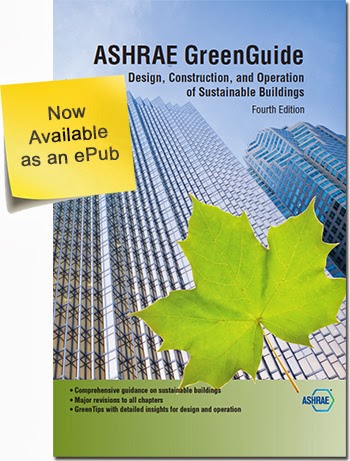
ASHRAE GreenGuide: Design, Construction, and Operation of Sustainable Buildings, 4th Edition, uses an integrated, building systems perspective to provide need-to-know information on what to do, where to turn, what to suggest, and how to interact with other members of the design team.
The guide contains several changes that will impact green building design.
First is a complete revision of the indoor environmental quality (IEQ) chapter with much of the content based on the Indoor Air Quality Guide: Best Practices for Design, Construction and Commissioning.
Another change is a new chapter on sustainable sites.
As in previous editions, the book contains Green Tips, or which are sidebars containing information on techniques, processes, measures or systems. There are 44 Green Tips in this edition, including new ones on topics such as condensing boilers, rain gardens, green roofs and data centers. 
 Click Image To Download Greenguide ASHRAE.
Click Link Here To Download &/Or View ASHRAE Greenguide. 
Whether you are an HVAC&R system designer, architect, building owner, building manager/operator, or contractor charged with designing a green building, ASHRAE GreenGuide aims to help you answer your biggest question:
"What do I do now?"
Using an integrated, building systems perspective, it gives you the need-to-know information on what to do, where to turn, what to suggest, and how to interact with other members of the design team in a productive way. Information is provided on each stage of the building process, from planning to operation and maintenance of a facility, with emphasis on teamwork and close coordination among interested parties.
This fourth edition of ASHRAE GreenGuide is an easy-to-use reference with information on almost any subject that should be considered in green-building design.
The Green Tips found throughout this edition highlight techniques, processes, measures, or special systems in a concise, often bulleted, format. Also, information is provided in dual units - Inch-Pound (I-P) and International System (SI) - so that the content is easily applicable worldwide. References and resources mentioned are listed at the end of each chapter for easy access.
 Click Image To Visit Direct Link On ASHRAE Homepage.
Click Here To Visit Direct Link To ASHRAE Bookstore Homepage Guide For Purchase Of Standards & Much More..., 
 Click Here Image To Visit ASHRAE Homepage.
Click Link Here To Visit ASHRAE Homepage Website.

14 Mar 2014

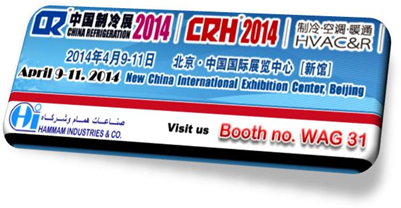
Hi E Community Event! Hi At Beijing!


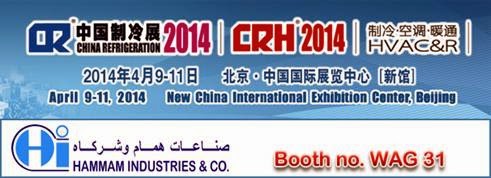
 Click Here Or Image To View CRH 2014 Exhibition Homepage Direct Link.
 Click Here Or Image To View CRH 2014 Exhibition Homepage Direct Link. 

Hi Visit Or Exhibit! Hi Beijing! Hi Exhibition! Hi China!


Initiated in the year of 1987, the International Exhibition for Refrigeration, Air-conditioning, Heating and Ventilation, Frozen Food Processing, Packaging and Storage (China Refrigeration Expo) has been reputed as one of the leading exhibitions you can't miss in HVAC&R industry for its over 20 years persistent improvement and innovation. 

This exhibition is organized by China Council for the Promotion of International Trade, Beijing Sub-council, Chinese Association of Refrigeration, China Refrigeration and Air-conditioning Industry Association, and has been certificated by the International Association of Exhibition Industry (UFI) and Foreign Commercial Service of Department of Commerce U.S. (US FCS).

Visit CRH 2014 Exhibition Homepage For More Downloads Click Here Or Image Above. 
Hi Exhibitors; Hammam Industries & Co. Egypt. 

Download The Official Exhibition; Reservation Form for CR2014. Click Here. 
Download The Show Express 2012 3th Edition . Click Here. 


Hi E Community Event! Hi At Beijing! 
Beijing CHR 2014

 Click Here Or Image To View CHR 2014 Exhibition Homepage.
Click Link Here or Image Above To Visit CRH 2014 Exhibition Homepage Link. 


An Hi Focal; Exhibition Overseas Partner;

 Click here to visit AMCA Certified Product Homepage.
Click here or image above to Visit AMCA Product Certified Homepage & To View AMCA Industry Codes / Standards.
Hi E Community Blog Announcement On Hammam Industries & Co. Highlight At Hi Focal Exhibition Point At Beijing! 

 Click Image To Visit CTI Certified Product Range & View MESAN Group Certified Range.
Click Image Above or Click Here To View CTI Certified Homepage For MESAN Group Cooling Towers & Directory Search. 
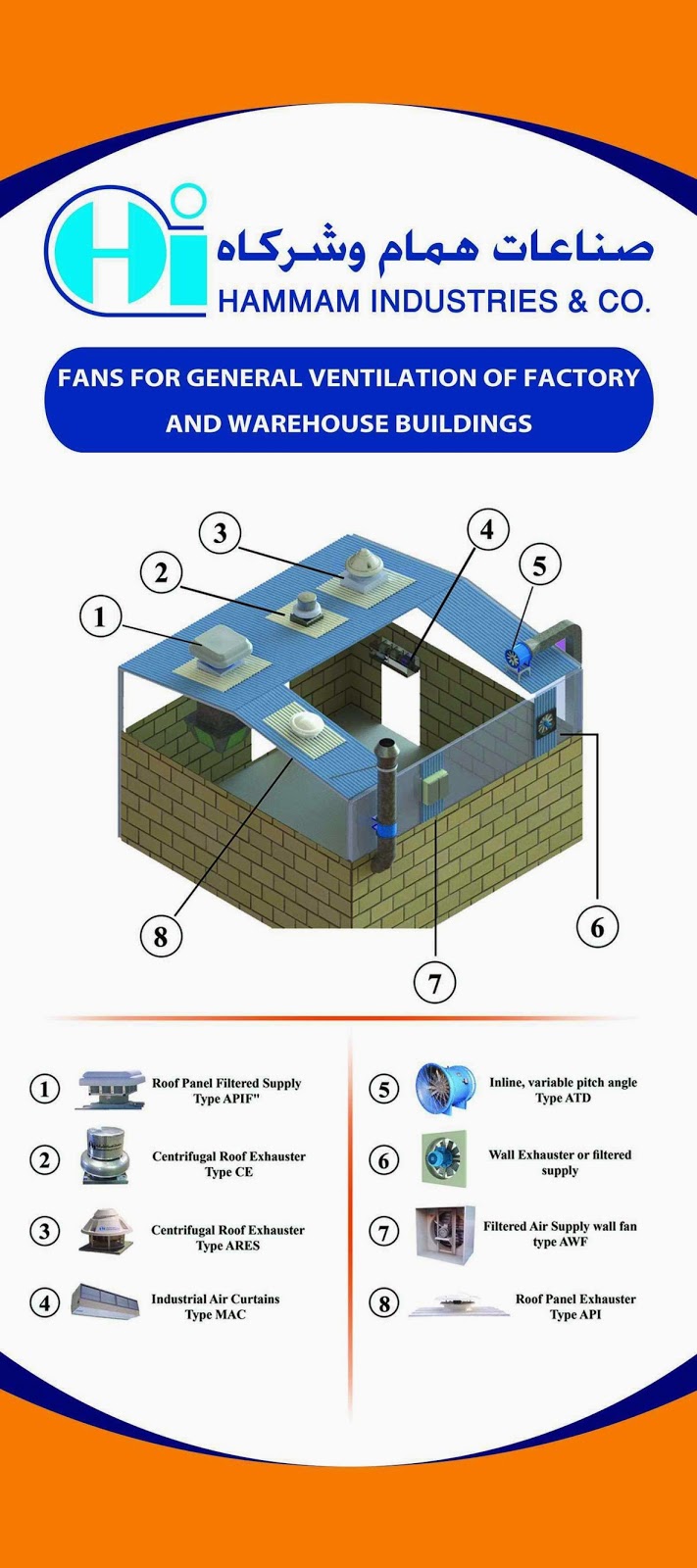
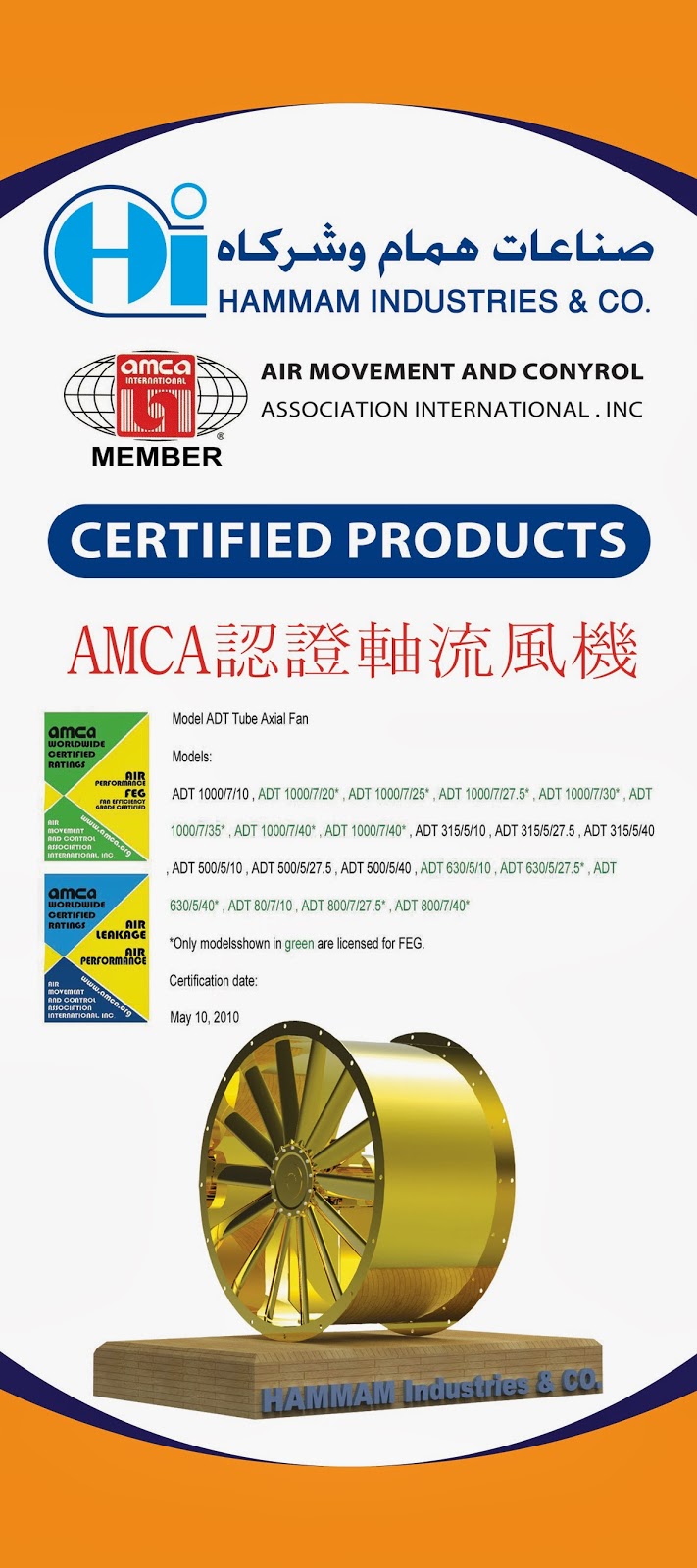
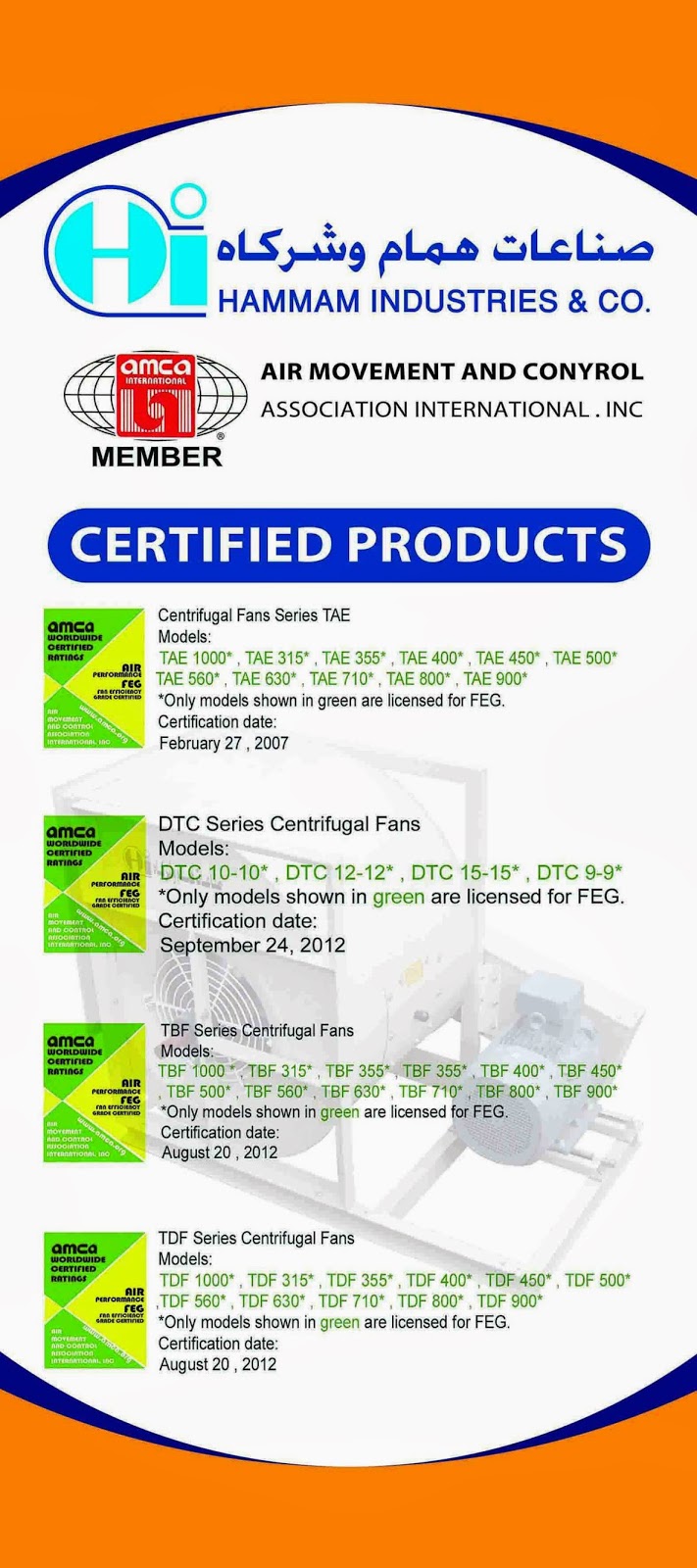
 Click Image Here To View Hammam Industries & Co. Sample of Projects. Click Image To  View Hammam Industries & Co. AMCA Certified Range.  Click Image To  View Hammam Industries & Co. AMCA Certified Range.
 Click Image To Visit CRH 2014 Website.
Click here or image above to visit CRH 2014 Website.

Visit Hammam Industries & Co. Egypt, Beijing CRH 2014

 Click Image To Visit MESAN Group Homepage.
Click here or image above to visit MESAN Group Homepage Link. 
 Click Image To Visit Hammam Industries & Co. MESAN Group CTI Certified Cooling Towers Range.
Click image above or here to visit Hammam Industries & Co. MESAN Group CTI Certified Product Range Available In Egypt. 
 Click Image To Visit Hammam Industries & Co. Website.
Click image above or here to visit Hammam Industries & Co. Homepage. 

Hi Growing Products; View Hammam Industries & Co. Available Smoke Exhaust Selection Certified Range .
 Click Here Or Image To Visit Hammam Industries & Co. Smoke Exhaust Range Of Products.
Visit Hammam Industries & Co. Smoke Exhaust Product Range & Much More Click The Homepage Link Here Or Image Above. 
 Click Image To View Hammam Industries & Co. Homepage For GT Fan Product Catalogue.
Hammam Industries & Co. GT Smoke Exhaust Series Visit Homepage Link To View & Download Product Catalogue.
 Click Here Or Image To View CRH 2014 Exhibition Homepage.
Click Image Above Or Link Here To Visit CRH 2014 Exhibition Homepage. 
An Hi Focal; Exhibition Overseas Partner;
 Click Here Or Image To View ASHRAE Homepage Link.
Click Link Here Or Image Above To View ASHRAE Homepage Link. 

30 Nov 2013

Hi Sustainable Development in Industrial Ventilation


Sustainable Development in Industrial Ventilation


The best route to sustainable development in industrial ventilation, dust extraction and waste extraction is through the design of the system. Moving air requires energy. Heating air requires energy. In both cases the potential to save energy over a prolonged period through good design exceeds that from other current efficiency developments. Key points of design include:
  • The air volume
  • Fan efficiency and motor control
  • Heat recovery and air make-up
  • Training and maintenance

Air volume:


The broad spectrum of industrial ventilation and process extraction requirements means that a simple solution to sustainable development is not possible as, for the most part, each system is a bespoke design for the specific application. However, optimizing the air volume in each design is without doubt one of the best. Why?
  • Air volume is directly proportional to power
  • 10% less air means 10% less energy
How is this achieved? Often through the design of the hood, the position relative to the emission source and how much that source is enclosed.


The hood designs in the diagram above represent concepts as there will often be limitations on how far this design philosophy can be followed. However, it is clear to see that the position of the hood relative to the emission source and changing to an enclosure hood design, where practicable, could reduce the required extraction air volume significantly.

Fan efficiency:


The range of fans used across the application of ventilation and process extraction systems being typically considered could have efficiency from 50% to 80%. The fan efficiency compares the input energy to the work done and has a significant impact on energy consumption, for example,
  • 40,000 hours operation broadly equates to 5-years @ 24/7 or 10-years @ 16 hours 5 days per week.
Based on 25kW aerodynamic energy requirement and an energy cost of 10p/kWh
  • A 50% efficiency fan would consume 50kW/h, at a cost of £200,000.00
  • A 75% efficiency fan would consume 33.3kW/h, at a cost of £133,200.00
If this is compared to the stated difference in efficiency between IE3, IE2 and IE1 motors of around 1.5-2%, at these motor ratings, then notwithstanding the possibly increased capital cost of selecting a higher efficiency fan, the energy savings through the 40,000 hour life cycle are vastly more significant than the initial costs. For more information on these motor standards, look up "Premium efficiency" on Wikipedia.

Motor control:


A related aspect to consider is the motor control where further energy saving possibilities exists although often not through the widely promoted speed or frequency inverter control.
In the first instance it is necessary to appreciate the laws of physics which apply to fans once installed in a system, assuming there are no changes to the ducting design.
  • A 10% increase in the fan speed increases the volumetric airflow by 10%; however it requires a 33% increase in electrical power.
  • Conversely, a 10% reduction in the fan speed reduces the airflow by 10% and reduces the electrical power by 27%. Just 5% speed reduction reduces the power by 14% so the savings through speed optimization can be significant.
However, a fan only absorbs the power required to do the work so, reducing the speed by 10% through a change in the drive belts may provide the saving at a modest investment. And as the power and motor size increase the savings become disproportionately greater.
% fan speed80%90%100%110%
% motor load kW51%73%100%133%
Table of motor power change with fan speed change
Example
  • 37kW motor installed
  • 32kW absorbed by the fan
  • Energy cost per annum, 24/7 operation, is £27,955 @ 10p/kWh.
  • Energy cost per annum, 16/5 operation, is £13,312
  • 10% speed reduction means absorbed power becomes 24kW
  • Assuming new drive belts and labour costs £500 (renewed annually anyway)
  • Then first year net saving at 24/7 operation is circa £7,000, then £7,500
  • And first year saving at 16/5 operation is circa £3,000, then £3,500.
Of course this is only applicable to a fan with a drive belt system fitted. An inverter controller will do the same, although the installation would cost more and an older motor may not be suitable for frequency variation control.
It should be noted there are certain advantages in using an inverter over the simple drive belt option including:
  • Applicable to all fans; direct drive or belt drive
  • Further speed change adjustments are easily made
  • Little loss in motor efficiency at reduced speeds, whereas reduced power at unchanged motor speeds may reduce the motor efficiency
  • Fan speed reduction is limited to reducing the rated motor power by 50%, when other factors may come into play
  • Applications with frequent start/stop cycles
In designing an extraction system, it is prudent and not untypical to err on the side of caution and allow for a modest increase in airflow and hence fan speed on completion of the installation, which would have an impact on the power required, and to select a motor one size above the bare minimum required. However, once installed and commissioned at the correct speed, the load on the motor may be some way below the motor duty, although only drawing the proportionate electrical current. Often a case is made for inverters based on the installed power rather than absorbed power of the fan motor. It is fairly simple for an electrical engineer to measure the running current of the motor compared to the motor rated full load current (FLC) to provide an indication of the energy being used.

Air input:


Exhausted air must be replenished either uncontrolled through egress into the building or controlled through an air make-up supply. Whenever the external temperature is below the required internal level, heat energy will also be required. Whether or not the air entering is controlled or not is often dependant on the building size and relative amount of extracted air. As an example, 70kW of heat energy would be required for a 20OC temperature rise in 10,000m3/h and with a 5p/kWh heat energy, could cost around £10,000 per annum on a 24/7 operation.
More sustainable approaches to air make-up include controlled introduction which reduces draughts and may, in some instances, lessen the heat load required. Re-using exhausted and filtered air will have an operational cost however often shows a payback within two to three years. Although less efficient than returning filtered air, heat exchangers may also enable the re-use of exhausted heat energy when filtering in impracticable. Sources of "free" heat should also be considered, compressors and hot process areas being valuable sources on occasion.
Once into operation the levels of training and maintenance can have an impact on wasted energy, environmental emissions or waste materials requiring landfill disposal.
The main objective under these headings is achieving optimum performance. By definition energy, emissions and waste are then controlled. It is a difficult position to reach and maintain. As ventilation and process extraction, (dust or waste), provide secondary or support roles to the principle production process all too often they get a lesser level of training and maintenance. Performance may decline gradually over time and often goes unnoticed with some examples including:
  • Incorrect low compressed air pressure or cleaning control settings resulting in lower filter cleaning efficiency. This increases pressure drop and hence the absorbed motor power, and may reduce extraction efficiency.
  • Incorrect high compressed air pressure resulting in "puffing"- dust passing through the filter bags due to over-cleaning which increases the carry-over emissions and reduces the life of the filter bags through fatigue during the cleaning process.
  • Incorrect fan belt drive adjustment leading to a loss of fan speed which could lead to lost production through a build-up in the ducting or lower efficiency in the extraction and a reduction in the control measure. Complying with COSHH/LEV guidelines may help to identify this, however with 14 month intervals there is a risk of long term deficiency.
  • Operators using equipment in an unintended manner is all too frequent and often goes unrecognised. When this situation occurs, performance as a control measure, emissions to atmosphere and an increase in energy consumption may easily result.
In conclusion, sustainable developments in industrial ventilation and process extraction applications are not only achievable but may be quite significant because they are based on good system understanding, design and use. Interestingly many recent developments in energy efficiency are over shadowed by the improvements which may be possible through design, equipment selection and an on-going user training and maintenance programme. It is clear that any low cost installation advantage may be far from the lowest overall cost and soon offset as running and service costs are included over a modest period of time. Also, when using and maintaining the system as intended, the safety and protection provided will be optimised.


6 Oct 2012

Hi AMCA Fan Efficiency Grade's (FEG's) Green Seal Announcement!.

Hi AMCA Fan Efficiency Grade's (FEG's) Green Seal Announcement!.

The following information was released by the Air Movement and Control Association International, Inc. (AMCA):

The Air Movement and Control Association International, Inc. (AMCA International) has recently revised its Publication 211-05, Certified Ratings Program - Product Rating Manual for Fan Air Performance to AMCA Publication 211-05 (Rev.3/11).

The revisions from March 2011 add requirements for certifying Fan Efficiency Grades (FEGs), revises the check test tolerance for Power, and clarifies how the check test tolerance is calculated in the absence of a catalogued free delivery airflow rate.

The new Fan Efficiency Grade program will support initiatives within many codes and standards that will encourage or require greater energy savings. Fan Efficiency Grades that are listed in approved electronic print catalogs may be accessed via a direct link from the AMCA International Directory of Licensed Products.

Hammam Industries & Co. has achieved AMCA Certification for Five Hammam Fan Series of Hammam Fan Products have Obtained the AMCA GREEN SEAL which certifies the fan efficiency grade FEG, in addition to Performance, Sound and Efficiency.

These are the HAMMAM: ADT; TAE; TDF; TBF; DTC series.


All fans have an FEG associated with their performance. It is a relatively simple process to obtain a certification of its FEG. To obtain the certification, the FEG rating must be published and the rating has to be verified by the AMCA International Staff. A form listing the models you desire to get FEG certified should be completed and sent with your proof catalog to the AMCA International headquarters for verification and to obtain a new license appendix.


If FEG ratings are the only catalog change, the catalog verification will completed at no charge. Please follow these guidelines.

The new "green" seal is now available for use with both approved electronic print catalogs (PDFs) and electronic selection softwares. Additionally, the new "green" seals purchased for application to product will be available after July 1, 2011.

The generic "FEG" seal can be used in a catalog when not all sizes in a licensed product line are "FEG" certified. If all sizes are "FEG" Certified, then either the "Sound, Air Performance and FEG" or "Air Performance and FEG" seals may be used in the catalog.

HAMMAM Industries & Co. Axial & Centrifugal FEG Certified Green Seal approved electronic print catalogues may be viewed at the link attachment provided.


The FEG certification is available for all fans that have a power input greater than 1 bhp, except air curtains, induced flow fans, energy recovery ventilators and positive pressure ventilators.

The purpose of the AMCA International Certified Ratings Program (CRP) provides the buyer, user and specifier assurance that the manufacturer's published performance ratings of air system components are reliable and accurate, and further, to provide these parties with information on how the product was tested, what appurtenances were included, and other pertinent information so that they may be able to select an air system component that will provide the performance required.


Hi Translate Linguistic Hi Proverb Tool.

(Hi) - Visit The New Digital World.

(Hi) - Visit The New Digital World.
As It Is Explained, Dismantled & Incorporated.

Ambient Air Quality Monitoring / Continuous Emissions Monitoring / Process Control / Data Handling.

Ambient Air Quality Monitoring / Continuous Emissions Monitoring / Process Control / Data Handling.
"Gas Monitoring Solutions"

Hi Air Pollution Engineering!.

Hi Regulations, Pollution Engineering!.

Hi Wikipedia Search.

Search results

Hi Bloggers Contact Form.

Name

Email *

Message *

Hi ' Graduate School at the Centre for Alternative Technology!.

Hi ' Graduate School at the Centre for Alternative Technology!.
"MSc Renewable Energy and the Built Environment."