Showing posts with label emissions. Show all posts

26 Oct 2014

Hi A Dark Side of Solar Power!!!

Hi A Dark Side of Solar Power!!!


The harshest criticism for fossil fuels has always been the horrible effect they have on the environment. Not only does retrieving the resource (coal, petroleum, natural gas) do irreparable damage to landscapes and ecosystems, but transporting it can be quite dangerous. And once the fuel has been spent, harmful byproducts clog the atmosphere and have far-reaching effects that scientists have only recently begun to quantify.

You know this, and I know this. And I know that you know that we all know this. This isn't going to be a recital of facts we know, ya know? But what about the negative environmental impacts our cultural shift to renewable energies, namely solar power, produce? There is a side to solar (PV) power that's rarely considered and not well understood.

Energy Payback Time (EPBT):

EPBT is the amount of time it takes a solar panel to collect the same value of energy that was expended in the panel's creation. It used to be that panels virtually never recaptured the amount of energy which was needed to create them, but that belief faded in the 1990s as the technology improved.


A significant amount of energy is spent producing, processing, and purifying materials for PV panels, as well as for the manufacture, transportation, and installation of the panel. The mathematical formula (.pdf) for determining the EPBT looks like this:


Rather than break down figures for areas with my limited text space, I'll just spoil the conclusion: the effectiveness of solar panels is severely affected by material efficiency and the location of the panel. In most of the United States, it takes almost two years before the panels begin to reduce emissions. At what latitude do solar panels stop making sense?


Environmental Waste:

Not surprisingly, China has been the leading manufacturer of PV panels worldwide by nearly fourfold. Despite this robust production rate, they're only second in PV power production (18,400 mW compared to Germany's 36k mW). What gives?


Frankly, China doesn't care about its environment and has little oversight on how companies dispose of industrial waste. And in consideration of the profit the industry is making, what regulations do exist are overlooked. U.S.-based PV panel manufacturers have a hard time disposing of toxic materials used in the production process. Chinese companies don't have the same difficulty, choosing to bury chemicals or flush them in public waterways. The result is a panel which was cheaper to produce and ship abroad.


Really, we're just burying the problem someplace else, hoping that a super-solution from future geniuses materializes in the meantime.

Wildlife Impacts:


The Ivanpah solar plant in utilizes 174,000 heliostats to reflect sunlight onto a centralized solar tower. The tower collects the sunlight, transfers it to heat, and boils water to begin the electricity production process. The plant is located in the Mojave Desert, away from population centers.

Human population centers, at least. While the imagery of a desert solar plant probably conjures images of dust and tumbleweeds, the area where the plant lives is much more lush than you might expect. When the plant was first announced, it incited considerable backlash because it was building on habitat that belonged to the endangered desert tortoise. The plant's construction was ultimately changed to help curtail its effects.

Now that the plant is up and running, an unforeseen consequence has occurred: an excessive number of bird deaths. Birds are lured to the area by insects or migration patterns, but once in the vicinity of the plant they're almost assured a hellish death. Estimates of up to 28,000 bird deaths a year have been attributed to the concentrated solar arrays, which blind and even ignite birds midflight. Officials are considering how to proceed with a megawatt and mega-money facility that may drive the extinction of entire species on its own.

The point isn't that solar power is harming our environment. Without a doubt, nearly any energy harvest strategy will conclude with negative environmental effects. But it shows that a long, long road of development must be traveled before our technology creates the sustainable utopia we envision. For now, we should probably maximize the efficiencies of the energy sources we have.


7 Sept 2014

Hi' Tips to Improve Indoor Air Quality;

Hi' Tips to Improve Indoor Air Quality;


Indoor air pollution is considered as one of the top environmental risks to public health worldwide due to increasing number of building-related illnesses. 
Studies have found that concentration of indoor pollutants is significantly higher indoors than they are in outdoor environment, which is two to five times and sometimes hundred times higher than outdoor levels. 
As most of the people spend 80% to 90% of their lives indoor, indoor air quality has significant implication on sustainability.
Decreased indoor air quality can affect quality of life of the building occupant, increase health risks and increase the liability for building owner, decrease the productivity of occupants and reduce the resale value of the building. Poor indoor air quality can cause “sick building syndrome”, which is a medical condition linked to poor health and absenteeism.
Poor indoor air quality is due to many factors including but not limited to improper building design, inadequate ventilation, off-gassing of volatile organic compounds (VOCs) from furniture, carpets, paints and coatings, cleaning products, and from human respiration. Airborne particles such as lints, dust, dust mites, mold, bacteria, pollen and animal dander also contribute to poor indoor air quality. Indicators that are used to measure the indoor air quality include total particulate matter, total volatile organic compounds (TVOCs), formaldehyde, carbon dioxide (CO2), carbon monoxide (CO), ozone (O3), air temperature, relative humidity (RH). Concentration of CO2 in the indoor environment indicates whether ventilation is sufficient or not.

In the Middle East region, most of the people live in enclosed air-conditioned indoor environments. With rapidly growing population, increase in number of vehicles on the road, high temperature level, ever increasing construction activities, regular sandstorm, concentration of air contaminants in the region is among the highest worldwide. Indoor environment also reflects outdoor air quality and pollution. Transport of outdoor contaminants to the indoor environment can result in occupant exposure to outdoor pollutants that have serious health impacts. In addition, there are many sources of indoor pollutants present in building materials, cleaning products, indoor mold and legionella growth, and emission from interior furnishings, finishing and equipments.
Tips to Improve Indoor Air Quality;

Indoor air quality is influenced by concentration of outdoor air pollutants as well as indoor source of pollution, characteristic of building and habits of occupants. Appropriate building design and mechanical system and control strategies as well as changing occupant behaviour can improve indoor air quality and health and comfort, performance and productivity of building occupants. There are a host of strategies to improve the indoor air quality.
Appropriate design;

Building envelop, orientation, and location of air intake, location of mechanical ventilation systems can contribute to indoor air quality. Hence, these factors should be considered during the design stage of projects to control the main source of pollutants for the whole building.
Whole house mechanical ventilation;

Properly designed and sized ventilation system can supply adequate outdoor air to indoor. In most of the green building rating systems, industry standards such as ASHRAE Standard 62 or Ventilation for Acceptable Indoor Air Quality are commonly followed.
Mixed mode ventilation:

Use of combination of mechanical and natural ventilation systems in buildings, such as automated window controlling systems and operable windows, can help in maintaining healthy indoor air quality.
Air quality management during construction:

During the construction phase, molds can develop due to exposure of building materials with moisture. Dust and particulates can easily accumulate on building materials if they are not protected. The air quality during the construction period can be protected by protecting the building materials from dust and particles and moistures.
High efficiency air filters

Filters prevent transports of outdoor VOCs, dusts, particulates and ozone indoors. Use of good particle filter such as high MERV rated filters in ventilation equipment are found to be the most effective filters in filtering outdoor dust and particulates out.
Maintenance schedule for HVAC filters:

Dirty filter can cause sensory irritation. Hence, appropriate maintenance schedule can prevent this to happen.
Use of low emitting materials

Use of materials that have low VOC content for products such as indoor carpets, rubber flooring, sub-floor materials, ceramics and ties, plasterboards, or other sealants and adhesives.  Also internal construction materials with low formaldehyde content can be helpful.
Conduct building flush out

Flushing out of indoor contaminants thoroughly in buildings before occupancy will help replacing dirty indoor air with fresh outdoor air.
Green cleaning program:

Select cleaning materials that are made of low emitting materials and employ a green cleaning program to reduce contaminant exposure.
Carbon dioxide monitors: Install CO2 monitors in ventilation system and integrate them to regulate the supply of fresh air according to the building occupants demand. By doing so, if the CO2 concentration increases beyond a set point, then the airflow automatically increases. 

Sustainable Cities.

14 Jun 2014

Hi Air - Mercury Emissions Spread Overland!.

Hi Air - Mercury Emissions Spread Overland!.

Hi Air / Water; A national study finds that mercury has spread, even to areas considered to be pristine.


Fig A Above;

Although generally low in concentration, a study of mercury levels in fish from 21 Western national parks did find some locations where mercury concentrations exceeded health thresholds for potential impacts to fish, birds and humans, according to a recent publication by U.S. Geological Survey (USGS) and National Park Service (NPS) researchers. This study, the first of its kind, detected mercury in all of the fish sampled, even from the more pristine areas of the parks.

What is Mercury?


Mercury is a toxic, global contaminant that threatens ecosystem and human health. It is a naturally occurring element and the only metal that exists as a liquid at room temperature. Mercury is also used in industrial practices, mostly for the manufacture of industrial chemicals and for electrical and electronic applications.
The EPA sets standards for safe consumption of fish for human health in regard to mercury levels. In addition, EPA and the U.S. Food and Drug Administration have issued a joint advisory regarding recommended consumption of fish and shellfish due to mercury contamination levels. More than 16 million lake acres and one million river miles are under fish consumption advisories due to mercury in the United States, and 81 percent of all fish consumption advisories issued by EPA are because of mercury contamination.

Where Were These Fish Found?


More than 1,400 fish were collected between 2008 and 2012 from hard-to-reach, high-elevation lakes and streams in 21 national parks in the Western United States and Alaska.  Investigators sampled 16 species, with a focus on sport fish such as brook trout, rainbow, cutthroat and lake trout, as well as smaller prey fish eaten by birds and other wildlife.

How Did Mercury Migrate?


Although there are natural sources of mercury, such as emissions from volcanoes, the majority of the mercury in these high elevation areas arrives from man-made sources such as coal-burning power plants, waste incinerators, oil and gas wells, and mining operations. The mercury can originate many miles from the national parks, as it travels through the atmosphere as tiny particles or gases. It then settles to the ground carried by falling rain or snow, or landing on the ground as dust particles. In wetlands, atmospheric mercury can be transformed into methylmercury, a more dangerous form to living organisms.

Methylmercury levels can accumulate in animals over time and actually increase in concentration up the food chain, resulting in very high levels in larger animals. This process is known as bioaccumulation and happens when predators eat prey animals that already have mercury in them. The mercury in the prey animals is then stored in the tissues of the predator.

Dangerous to Human and Animal Health!!!


During their research, the scientists found that the mercury levels in fish greatly varied between parks and between sites within each park. In most parks, mercury concentrations in fish were moderate to low in comparison with similar fish species from other locations in the Western United States. Mercury concentrations were below EPA’s fish tissue criterion for safe human consumption in 96 percent of the sport fish sampled.

There were, however, particular areas that researchers identified elevated fish mercury concentrations, including levels that exceed safe human consumption or wildlife health benchmarks. Some sport fish exceeded the EPA human health criterion at Lake Clark, Lassen Volcanic, Mount Rainier, Rocky Mountain, Wrangell-St. Elias, Yellowstone and Yosemite national parks.

Mercury concentrations in individual fish also exceeded the most conservative fish toxicity benchmark at Capitol Reef, Lake Clark, Lassen Volcanic, Mount Rainier, Rocky Mountain, Wrangell-St. Elias, Yosemite and Zion national parks. Mercury levels in some fish exceeded the most sensitive health threshold for fish-eating birds at all parks except Crater Lake, Denali, Grand Teton, Great Basin, Great Sand Dunes, Mesa Verde and Sequoia-Kings Canyon national parks.

Start with Science!!!


Although risk of harm to humans and wildlife may be low in many locations, there are substantial concerns about the locations with high risk. 

This study identified areas where additional research is needed to better understand the risk to all national park units, and other remote landscapes or understudied environments.

Ultimately, advisories and related warnings consider both the risks and benefits of consuming fish. 

Future collaborations between research groups would map patterns of mercury across national parks in greater detail, supporting resource managers’ decisions to protect both national park visitors and the wildlife they come to see.

The USGS’s website at  provides many fascinating stories and information, click the link here to visit the site. 

- "Their tag line is “science for a changing world.”


Fig B. Above; Spatial distribution of the 21 national parks sampled in this study. Size of circle represents percentage of total dataset.


Fig C. Above; A NPS researcher holds a brook trout in Mount Rainier National Park. Image credit: Collin Eagles-smith, USGS.

26 Apr 2014

Hi Financial Incentives For Green Retrofits.!

Hi Financial Incentives For Green Retrofits.!

"Did you know a green roof not only helps you cut your facility’s cooling bills in the summer but it can also help you reduce your heating bills in the winter."
In fact, a green roof  can help you reduce your cooling bill by up to 75% compared to conventional roofing, and it can help you save between 5.63% and 5.95% – up to 61% for upper floors – on your heating costs.
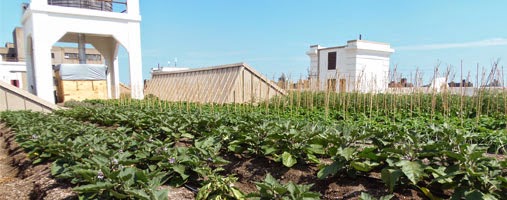
A green roof is a living roof.It’s either fully or partially covered with vegetation and a growing medium, and it has a waterproofing membrane. 
Additionally it may contain drainage and irrigation systems.
Green roofs can be installed on a range of commercial buildings. 
Thanks to some new financial incentives, green roofs may become increasingly affordable for more facilities.


Building.com


 Visit Building.com Envison a Green Roof Retrofit.

Bishop Loughlin Memorial High School turned its original rooftop (left) into a green roof (right) with help from a DEP grant.
PHOTO CREDIT: DEPARTMENT OF ENVIRONMENTAL PROTECTION.
" Green roofs serve several purposes, but first and foremost they offer shade and remove heat from the air through evapotranspiration – the movement of water to the atmosphere from places like the soil or vegetation. This reduces the temperature of the surface of the roof as well as of the surrounding air."
The "EPA" says these are the benefits of a green roof:
  1. Reduces energy usage: Because green roofs absorb heat and insulate buildings, they reduce the energy needed for heating and cooling.
  2. Reduces pollution and greenhouse gas emissions: When air conditioning demand is lessened, so is the production of air pollution and greenhouse gas emissions.
  3. Improves occupant health and comfort: Green roofs reduce heat transfer, lowering the heat stress usually experienced during heat waves and improving indoor comfort.
  4. Better stormwater management and water quality: Greens roofs slow stormwater runoff and filter rain water pollutants.
  5. Quality of life: Green roofs provide habitats for many species.

Download EPA .PDF Document.

Green Roofs Chapter (PDF) (29 pp, 4.2MB) from EPA’s Reducing Urban Heat Islands: Compendium of Strategies.
One example of a green roof financial incentive program is the Green Infrastructure Grants from the New York City Department of Environmental Protection (DEP). 

The grants can cover the startup costs for commercial building owners to retrofit their facilities with green roofs.
Two projects serve as examples of what’s possible with the grant funding.
Bishop Loughlin Memorial High School, a Catholic high school in Brooklyn, installed 13,300 square feet of vegetated mats on its building after receiving a $235,700 Green Infrastructure Grant. About 90% of the roof is covered in green material that will help the building handle the expected 435,000 gallons of stormwater that falls on the school’s roof every year.
The South Bronx nonprofit Osborne Association installed a green rooftop system to absorb rainwater and improve air quality. The system is expected to reduce runoff by 32% during a typical storm. The NYC DEP contributed $288,000 to the project via a Green Infrastructure Grant.
The upfront costs of a green roof retrofit are higher when compared to the installation of conventional materials, but facility owners can offset the costs over time through the savings achieved by using less energy and saving stormwater management costs.
 Visit NYC’s Green Infrastructure Grant Program Homepage.

 http://www.nyc.gov/html/dep/html/stormwater/nyc_green_infrastructure_grant_program.shtml

Consult your local government office for more information on what incentives may be available to facilities that invest in green roof retrofits.

NYC Green Infrastructure Video.

17 Apr 2014

Hi Court; "Upholds EPA Emission Standards."

Hi Court; "Upholds EPA Emission Standards."


WASHINGTON (AP) -- A federal appeals court on Tuesday upheld the Environmental Protection Agency's first emission standards for mercury and other hazardous air pollutants from coal- and oil-fired power plants.
In its ruling, the court rejected state and industry challenges to rules designed to clean up chromium, arsenic, acid gases, nickel, cadmium as well as mercury and other dangerous toxins.

The EPA's determination in 2000 that regulating emission standards is appropriate and necessary, and the agency's reaffirmation of that determination in 2012, 'are amply supported by EPA's findings regarding the health effects of mercury exposure,' said the court.
Congress did not specify what types or levels of public health risks should be deemed a hazard under federal law

By leaving this gap in the statute, Congress delegated to the EPA the authority to give reasonable meaning to the term 'hazard,' said the court.
In the majority were chief judge Merrick Garland and judge Judith Rogers, both appointees of President Bill Clinton

Judge Brett Kavanaugh, an appointee of President George W. Bush, joined most of the decision, but he parted company with his colleagues on the issue of cost - specifically, whether the EPA is obligated to consider industry costs in deciding whether regulation of hazardous air pollutants from power plants is appropriate.
'The problem here is that EPA did not even consider the costs,' Kavanaugh said. 'And the costs are huge, about $9.6 billion a year - that's billion with a b - by EPA's own calculation.'

In response, the majority said the EPA properly decided that the decision whether to regulate mercury should be based on health risks, not compliance costs
The majority added that the EPA had determined that benefits of the rule exceeded costs by a factor of at least 3 to 1. Some industry groups have said the EPA was overstating the benefits.
It is only in the first stage of rulemaking that the EPA doesn't industry costs, said the majority opinion. 
It added that the second stage leads to standards that are more restrictive and that, when setting those, the EPA does consider costs.
The new regulations are designed to remove toxins from the air that contribute to respiratory illnesses, birth defects and developmental problems in children.
Most companies operating power plants will have until March 2015 to meet the standards, but a state could grant an additional year and the EPA could extend the deadline until 2017 if the unit was critical for reliability.
- "The EPA proposed the rules in 2011."
Tuesday's ruling is 'a giant step forward on the road to cleaner, healthier air,' said Fred Krupp, president of the Environmental Defense Fund, which was a party in the case.
The EPA called the decision 'a victory for public health and the environment.'
'These practical and cost-effective standards will save thousands of lives each year, prevent heart and asthma attacks, while slashing emissions of the neurotoxin mercury, which can impair children's ability to learn,' the EPA said.


Laura Sheehan, senior vice president of communications for the American Coalition for Clean Coal Electricity, said that due in part to regulations like the one in Tuesday's ruling, almost 300 coal-fueled generating units in 33 states have announced they will shut down, costing the electricity sector roughly $200 billion in compliance costs and destroying at least 544,000 jobs.
Sheehan said that impacts of EPA's rulemaking processes aimed at coal have already been seen this past winter, with coal power plant retirements leading to increased reliance on natural gas - a just-in-time fuel source subject to volatile price spikes that many consumers and small businesses bore the brunt of. 
She said such impacts will only increase as more coal units are retired, especially next spring, the deadline for complying with the mercury standard.

The coalition says industry has invested $130 billion to reduce major emissions from coal-fueled power plants by nearly 90 percent and that it plans to invest another $100 billion over the next decade on clean coal technology.

National Mining Association President and CEO Hal Quinn said the federal rule 'imposes enormous costs upon households and businesses but provides little additional environmental benefit. The court recognized the EPA has the authority to consider costs but upheld EPA's decision to ignore them.'

Hi Translate Linguistic Hi Proverb Tool.

(Hi) - Visit The New Digital World.

(Hi) - Visit The New Digital World.
As It Is Explained, Dismantled & Incorporated.

Ambient Air Quality Monitoring / Continuous Emissions Monitoring / Process Control / Data Handling.

Ambient Air Quality Monitoring / Continuous Emissions Monitoring / Process Control / Data Handling.
"Gas Monitoring Solutions"

Hi Air Pollution Engineering!.

Hi Regulations, Pollution Engineering!.

Hi Wikipedia Search.

Search results

Hi Bloggers Contact Form.

Name

Email *

Message *

Hi ' Graduate School at the Centre for Alternative Technology!.

Hi ' Graduate School at the Centre for Alternative Technology!.
"MSc Renewable Energy and the Built Environment."