Showing posts with label water. Show all posts

23 May 2015

A Hi Rocky Relationship Is it Not? Water & Electricity!

A Hi Rocky Relationship Is it Not? Water & Electricity! 


Mixing water and electricity doesn’t usually end well, but marine engineering group Knud E Hansen A/S sees this rocky relationship as a challenge.

According to the Handy Shipping Guide, the company has designed a new ferry capable of making an entire voyage on electric power. 

Many shipbuilders are following suit, looking for ways to create more eco-friendly, sustainable seafaring options, but all-electric propulsion systems come with their own unique issues especially in terms of maintenance; how do engineers and operators make sure their boats stay afloat?

Slow & Steady:


The new ferry comes in at 35 meters in length with a beam of 11 meters, capable of carrying 170 passengers and 12 cars from Nolsoy island to Torshavn and back again on single battery charge. 

It can also withstand waves of up to three meters high and was designed with energy conservation in mind, featuring both batteries and a heat recovery system. 

It won’t win any speed records, since it’s nowhere near the 100 km/hr or better ships designed to run on liquid natural gas (LNG), but the ability to run entirely on battery power and survive a potentially rough sea crossing is no mean feat. 

Simply put, the Knud E Hansen A/S ferry speaks to function more than form—and eschews traditional fuel-based thrust for clean and reliable electricity. 

Emerging Issues:


According to a Hitachi white paper, on board electrical propulsion systems come with a number of advantages including reduced noise and the integration of both power and thrust systems, but they aren’t without issues: Electric systems come with a higher initial cost, increased energy conversion loss and large overall “footprint” owing to more total component parts. 

Water infiltration can cause serious issues, anything from short circuits to total system failure.For example, Cruise Critic reports that last year a Carnival Cruise ship was forced to cut out a port of call after an electrical transformer malfunction, which limited the ship’s overall speed. In the case of a complete electrical drive system, such a short could be disastrous.

The New Maintenance:


What does this mean for shipping companies and marine organizations? That in an era of clean power, new maintenance tools are needed. 

Marine Insight argues that on board engineers must now be able to tackle challenges such as electrical motor overhauling and shore power supply connection, in addition to having complete knowledge of an engine’s automation system. 

Scale deposits also pose an issue, potentially inhibiting electrical connections and leaving a ship dead in the water; regular and precise descaling is required to keep engines in top shape.

The rise of Eco-friendly ship propulsion systems means less waste and better ROI for companies, but also comes with unique maintenance challenges—even the best electric system generates no profit in dry dock. 

Dealing with Scale Deposits in Maritime Environments:

Within ocean water, dissolved solids lead to lime scale deposits in offshore equipment systems.

Build-up of lime scale (calcium carbonate) deposits present problems, particularly in water cooled engine jackets as well as heat ex changers for production of hot water service for crew and passengers. In ship waste water piping, scale deposits will block off lines and scale up tanks as well causing adverse effects on pump seals and valves.

Boilers, steam turbines and ballast systems are also vulnerable to scale build-up of and subsequent problems of overheat, shut down or blockages.

Lime Scale deposits in these equipment systems can be effectively remedied by the use of inhibited acid descaling. 

Descalers quickly dissolve calcium, lime, rust, lithium carbonate and other types of deposits from passages in water cooled or heated equipment as described.


29 Jul 2014

(Hi) Cross flow HEMF from IPS provides clean process water and reduces downtime!.

(Hi) Cross flow HEMF from IPS provides clean process water and reduces downtime!.


According to Industrial Purification Systems, process water users can achieve effective water filtration by installing Cross flow HEMF and at the same time save on operating costs by reducing downtime.


The technology filters water down to levels below 1.0 micron, reliably producing a supply of clean water not only free of solids contamination such as sand, grit and iron but also with reduced bacteria, phages and spores such as cryptosporidium.
By reducing the total biological and organic loading from water, chemical dosing is more effective as there is less of a challenge.
 This in turn often results in significant chemical use reduction, which is better for the water user, better for the environment and reduces operational costs.
The company said that industries that have installed this technology have reported a return on investment in less than six months, with some achieving payback in three.
Click on the following link here to download the Cross flow technical information sheet.


Key benefits;

  • Filtration of process water down to 0.45 micron with efficiencies up to 99 per cent.
  • Filtration of up to five times more water than a conventional filter achieving only 20-micron filtration.
  • Longer ‘on line’ filtration time.
  • Acceptance of solid challenges in excess of 200ppm.
  • Short backwash times.
  • More effective chemical treatment with fewer chemicals.
  • Maintaining heat-transfer efficiencies for life of a system.
  • Cleaning up older, already contaminated systems and improving performance.
  • Reducing backwash loss by up to 95 per cent.
  • Reducing costs by reducing loss of chiller and or heater kW input during backwash.
  • Inlet pressure of only 1.0barg to operate.
  • Minimum energy losses for pumping and processing through high flow, low pressure.

Industries and applications that benefit;

  • Plastic moulding shops.
  • Oil and gas exploration.
  • Power generation.
  • Paper manufacturing.
  • Automotive manufacture.
  • District heating/cooling.
  • Pollution control.
  • Data centres, banks, hotels, universities.
  • UPVC extruders for pipes and windows.
  • Potable water production.
  • High-performance heating cooling loops.
  • Brick, marble stone cutting.
  • Brewing and distilling.
  • Manufacturing.
  • Nuclear power and processing.

Case study: Sheffield Homes uses Cross flow HEMF from IPS for efficient water filtration:


- 'Efficient water filtration is a hot topic for Sheffield homes’


Sheffield Homes manages the continual improvement of council homes across Sheffield. 
The company has a network of boilers and district heating pipework running throughout the city, which supplies heating and hot water to council properties. 
It is crucial that the water flowing through the pipework is kept as clean as possible to maintain flow rates and in so doing achieve maximum energy efficiency. 
Some sections of the pipe network are more than 35 years old. Over time, the pipes have collected debris and particles in the water, which have caused restrictions in the flow rates to some properties and led to problems maintaining an efficient district heating system.
Expensive pump and boiler parts and replacements are often required due to these issues. 
It was therefore felt there was a strong business case to introduce a filtration system to help clean and prolong the life of the heating systems as well as reducing maintenance costs.
Sheffield Homes chose the Cross flow HEMF advanced media filter from Industrial Purification Systems.
Click the following link here to download case study Or view & save below; 


*Click the following link here for further supplier information and company manufacturer brochure download or visit the company homepage by clicking the following link here. 

Watch Below, Introduction Video Clip:


14 Jun 2014

Hi Air - Mercury Emissions Spread Overland!.

Hi Air - Mercury Emissions Spread Overland!.

Hi Air / Water; A national study finds that mercury has spread, even to areas considered to be pristine.


Fig A Above;

Although generally low in concentration, a study of mercury levels in fish from 21 Western national parks did find some locations where mercury concentrations exceeded health thresholds for potential impacts to fish, birds and humans, according to a recent publication by U.S. Geological Survey (USGS) and National Park Service (NPS) researchers. This study, the first of its kind, detected mercury in all of the fish sampled, even from the more pristine areas of the parks.

What is Mercury?


Mercury is a toxic, global contaminant that threatens ecosystem and human health. It is a naturally occurring element and the only metal that exists as a liquid at room temperature. Mercury is also used in industrial practices, mostly for the manufacture of industrial chemicals and for electrical and electronic applications.
The EPA sets standards for safe consumption of fish for human health in regard to mercury levels. In addition, EPA and the U.S. Food and Drug Administration have issued a joint advisory regarding recommended consumption of fish and shellfish due to mercury contamination levels. More than 16 million lake acres and one million river miles are under fish consumption advisories due to mercury in the United States, and 81 percent of all fish consumption advisories issued by EPA are because of mercury contamination.

Where Were These Fish Found?


More than 1,400 fish were collected between 2008 and 2012 from hard-to-reach, high-elevation lakes and streams in 21 national parks in the Western United States and Alaska.  Investigators sampled 16 species, with a focus on sport fish such as brook trout, rainbow, cutthroat and lake trout, as well as smaller prey fish eaten by birds and other wildlife.

How Did Mercury Migrate?


Although there are natural sources of mercury, such as emissions from volcanoes, the majority of the mercury in these high elevation areas arrives from man-made sources such as coal-burning power plants, waste incinerators, oil and gas wells, and mining operations. The mercury can originate many miles from the national parks, as it travels through the atmosphere as tiny particles or gases. It then settles to the ground carried by falling rain or snow, or landing on the ground as dust particles. In wetlands, atmospheric mercury can be transformed into methylmercury, a more dangerous form to living organisms.

Methylmercury levels can accumulate in animals over time and actually increase in concentration up the food chain, resulting in very high levels in larger animals. This process is known as bioaccumulation and happens when predators eat prey animals that already have mercury in them. The mercury in the prey animals is then stored in the tissues of the predator.

Dangerous to Human and Animal Health!!!


During their research, the scientists found that the mercury levels in fish greatly varied between parks and between sites within each park. In most parks, mercury concentrations in fish were moderate to low in comparison with similar fish species from other locations in the Western United States. Mercury concentrations were below EPA’s fish tissue criterion for safe human consumption in 96 percent of the sport fish sampled.

There were, however, particular areas that researchers identified elevated fish mercury concentrations, including levels that exceed safe human consumption or wildlife health benchmarks. Some sport fish exceeded the EPA human health criterion at Lake Clark, Lassen Volcanic, Mount Rainier, Rocky Mountain, Wrangell-St. Elias, Yellowstone and Yosemite national parks.

Mercury concentrations in individual fish also exceeded the most conservative fish toxicity benchmark at Capitol Reef, Lake Clark, Lassen Volcanic, Mount Rainier, Rocky Mountain, Wrangell-St. Elias, Yosemite and Zion national parks. Mercury levels in some fish exceeded the most sensitive health threshold for fish-eating birds at all parks except Crater Lake, Denali, Grand Teton, Great Basin, Great Sand Dunes, Mesa Verde and Sequoia-Kings Canyon national parks.

Start with Science!!!


Although risk of harm to humans and wildlife may be low in many locations, there are substantial concerns about the locations with high risk. 

This study identified areas where additional research is needed to better understand the risk to all national park units, and other remote landscapes or understudied environments.

Ultimately, advisories and related warnings consider both the risks and benefits of consuming fish. 

Future collaborations between research groups would map patterns of mercury across national parks in greater detail, supporting resource managers’ decisions to protect both national park visitors and the wildlife they come to see.

The USGS’s website at  provides many fascinating stories and information, click the link here to visit the site. 

- "Their tag line is “science for a changing world.”


Fig B. Above; Spatial distribution of the 21 national parks sampled in this study. Size of circle represents percentage of total dataset.


Fig C. Above; A NPS researcher holds a brook trout in Mount Rainier National Park. Image credit: Collin Eagles-smith, USGS.

26 Apr 2014

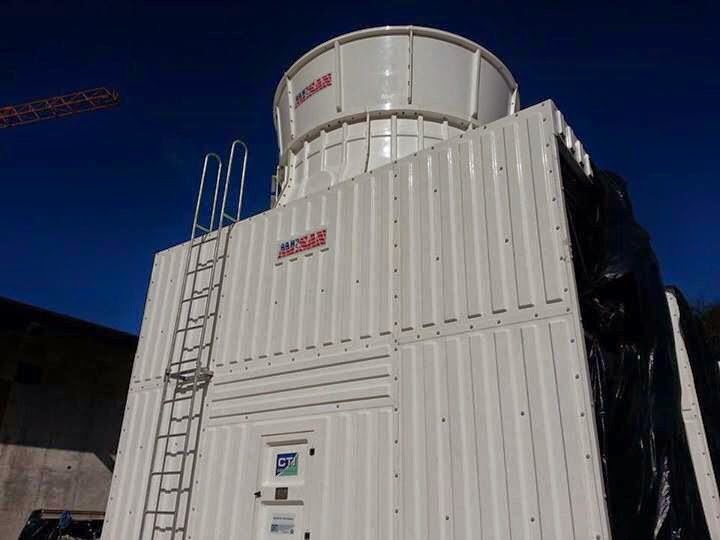
Hi Top 8 Recommendations For Keeping Your Cooling Tower Clean.!

Hi Top 8 Recommendations For Keeping Your Cooling Tower Clean.!


It’s time to start thinking about cooling tower maintenance again. The top two reasons we bring up this topic at least yearly is because a dirty cooling tower; 
1) affects system performance and 2) can affect occupant health.
We often discuss the seriousness of Legionnaires’ disease, and a cooling tower’s role in the transmission of Legionella pneumophila, the bacteria that causes the disease.
The Occupational Safety and Health Administration (OSHA) recommends visual inspection and regular maintenance as the best ways to control the growth of organisms in a cooling tower. 
The organization discourages the use of water quality measurements (total bacterial counts, total dissolved solids and pH) to monitor Legionnaires’ disease bacteria (LDB) levels.
Here are more of OSHA’s top recommendations for keeping your facility’s cooling tower clean and free of LDB:
  1. Use chemical biocides to control microorganisms.
  2. Keep sump water around 68°F or lower.
  3. Inspect the cooling tower equipment monthly.
  4. Clean and disinfect your facility’s cooling tower quarterly or twice a year if the unit is not in operation year-round. It’s important to clean it at the beginning of each cooling season and after it’s shut down in the fall.
  5. Systems with high levels of LDB may require more cleaning.
  6. Clean and disinfect systems any time they are out of service for an extended time.
  7. Clean and disinfect new systems to remove any construction material residue.
  8. Keep detailed records showing all dates and details of operations and maintenance, a description of the operating system, and procedures for operation and maintenance including the use of any corrosion inhibitors, biocides, or other chemicals.
You can read the complete list of cooling tower maintenance recommendations from OSHA here.
- "The process of cleaning your facility’s cooling tower used to require a total shut down, but that’s no longer the case. All cleaning may be completed while the tower is still online."
 Visit Mesan Group Homepage To View CTI Certified Cooling Towers Range.

Click Here To View Mesan Group Cooling Towers Homepage.

2 Mar 2013

Hi Ebook - LEED New Construction Project Management Book!.

Hi Ebook - LEED New Construction Project Management Book!.

MC Gr aw-Hi ll Professional | 2010 | ISBN: 0071744452 | 496 pages | PDF | 14,9 MB 
A One-Stop Guide to Managing LEED-New Construction Projects:


This Green Source book explains, step by step, how to integrate LEED-New Construction (NC) rating system requirements into the building design and construction processes. Project planning, goals, coordination, implementation, and documentation are covered in detail. 


LEED-New Construction Project Management provides a tested framework for taking a project from inception to successful certification and shows you how to master the tools to make the process more efficient. Three in-depth case studies covering new commercial building construction, major renovations, and a portfolio of buildings highlight the strategies presented in the book. 


LEED-New Construction Project Management covers:

The LEED rating system and LEED-NC credit categories 
The project management process 
Project definition and goal setting 
Design phase integration 
Construction phase implementation 
The LEED process: adaptability, applicability, and best practices 
Future trends 

Credit implementations: sustainable sites; water efficiency; energy and atmosphere; materials and resources; indoor environmental quality; innovation in design.

Hi Translate Linguistic Hi Proverb Tool.

(Hi) - Visit The New Digital World.

(Hi) - Visit The New Digital World.
As It Is Explained, Dismantled & Incorporated.

Ambient Air Quality Monitoring / Continuous Emissions Monitoring / Process Control / Data Handling.

Ambient Air Quality Monitoring / Continuous Emissions Monitoring / Process Control / Data Handling.
"Gas Monitoring Solutions"

Hi Air Pollution Engineering!.

Hi Regulations, Pollution Engineering!.

Hi Wikipedia Search.

Search results

Hi Bloggers Contact Form.

Name

Email *

Message *

Hi ' Graduate School at the Centre for Alternative Technology!.

Hi ' Graduate School at the Centre for Alternative Technology!.
"MSc Renewable Energy and the Built Environment."