Showing posts with label world. Show all posts

6 Nov 2014

Hi Innovating global Halal industries!!!

Hi Innovating global Halal industries!!!


As the $2 trillion Halal industry, which includes food, finance and much more, grows, many call for new ways to develop coherence and diversity.
“Demand is increasing and we now must focus on developing our products. I am not saying forget about being Halal, but we must start innovating,” says Saleh Abdullah Lootah, Managing Director of Islami Foods.
Speaking at the WIEF conference in Dubai, which ended on October 30, Lootah went on to stress the need to get rid of Halal complexes: “There are different norms and cultures across different regions, so it is difficult to apply one model of Halal-compliant business.”
This comes at a time when the Muslim world is looking at itself in hopes to develop the cross-border trade of Halal-certified goods. Media reports this week claim that a series of memoranda of understanding and agreements have been signed by Dubai Exports in partnership with Malaysia’s Halal HDC, and the Dubai Islamic Economy Development Centre (DIEDC).

Lootah goes on to talk about the need for the Halal industry to innovate the consumer experience. “The next step is to focus on innovating the Halal experience and, making it attractive to Muslims and non-Muslims alike.”
In his closing address, HE Hamad Buamim, President and CEO at the Dubai Chamber of Commerce and Industry, the co-organizers, said that the forum marked the “start of a new chapter of cooperation between Dubai and the world, as part of Dubai: Capital of Islamic Economy vision.”
“We must also harness technology, which is driving progress in the global economy, to ensure the future development of Halal industries,” he notes.
Overall, the rhetoric coming from leaders of the Halal industries was based around developing the right technologies to enhance and innovate the Halal products to globalize the industry.

The WIEF conference attracted more than 2,000 participants from all around the world. Organized in a collaboration between the WIEF Foundation, the Dubai Chamber of Commerce and Industry and Dubai Capital of Islamic Economy, the event was held at the Madinat Jumeirah Conference Centre Dubai on October 28-30, 2014, with the arching theme ‘Innovative Partnerships for Economic Growth’, which seeks to position Dubai as a leader of global Halal industries.

23 Oct 2014

Hi Standards Leave Their Mark on Engineering.

Hi Standards Leave Their Mark on Engineering.

World Standards Week takes place the week of October 20, and it presents an opportunity to reflect on how standards are used in engineering and impact almost every facet of modern life.

For example, standards make it possible for the Internet to exist and for Engineering360 to be shared seamlessly worldwide. Likewise, banking institutions function on a set of standard protocols that enable global trade to take place.


As this article’s main photo suggests, the National Institute of Standards and Technology in 2011 published a revised biometric standard that vastly expands the type and amount of information that forensic scientists can share across international networks to identify victims or solve crimes.
But even something as simple as a screw has thousands of standards associated with it. These ensure that the manufactured product is usable everywhere, says Robert Russotti, senior director for online marketing at theAmerican National Standards Institute (ANSI).

Standards cover testing, performance, quality and procedures, Russotti says. They help a specifying engineer determine, for example, how many times a door hinge will open and close before it’s likely to fail, or if a particular metal is suitable for grinding.

A more ( shall we say) standard definition from the International Organization for Standardization (ISO) and the International Electrotechnical Commission (IECA) defines a standard as a document, established by consensus that provides rules, guidelines or characteristics for activities or their results.
ISO says that it does not decide when to develop a new standard. Instead, ISO responds to a request from industry or other stakeholders. Typically, an industry sector or group communicates the need for a standard to its national member (such as ANSI in the U.S.) who then contacts ISO. 
ISO standards are developed by groups of experts from all over the world, that are part of larger groups called technical committees. These experts negotiate all aspects of the standard, including its scope, key definitions and content.


Developing ISO standards is a consensus-based approach and comments from stakeholders are taken into account. So-called Draft International Standards are circulated among ISO members who have three months to comment and vote on the draft. ANSI coordinates the U.S. voluntary consensus standards system. In that role it provides a neutral forum for the development of policies on standards issues and serves as a watchdog for standards development and conformity assessment programs and processes.

ANSI also accredits qualified organizations, whose standards development process meets all of ANSI’s requirements, to develop American National Standards. However, ANSI itself does not develop standards. In addition, ANSI represents U.S. interests in regional and international standardization activities while overseeing conformity assessment activities that promote the global acceptance of U.S. products, services, systems and personnel.

In the U.S., standards are voluntary and consensus based, which means that product designers and manufacturers can decide whether or not to follow them. The marketplace helps decide whether or not a non-standard product achieves success. In other countries, standards carry the force of law. Standards also may be used as a defense in a legal challenge. A product that fails may be defensible if it can be proved that it conformed to specific standards, Russotti says.

 Hi Click Here To View ISO Standard Homepage.

American National Standards (ANSs) are essential tools used in every industry. Today, there are some 9,500 ANSs that have been developed and approved in accordance with ANSI essential requirements. American National Standards are voluntary and serve U.S. interests well because all materially affected stakeholders have the opportunity to work together to create them. ANSI-approved standards only become mandatory when, and if, they are adopted or referenced by the government or when market forces make them imperative.

ANSI says that globally relevant standards make it easier for many companies to get their products certified and on the shelves in countries around the world, allowing them to take part in global value chains, benefit from technology transfer and compete on a more equal footing. Similarly, nations that incorporate international standards into their policies and regulations can allow their citizens access to a wider selection of high-quality goods, while also providing protection against dangerous or faulty products and services.


6 Oct 2014

Hi UPDATE 2-Egypt pays $1.5 bln to foreign energy companies - oil ministry.

Hi UPDATE 2-Egypt pays $1.5 bln to foreign energy companies - oil ministry.


(Updates to include financing details)
Oct 2 (Reuters) - Egypt has paid $1.5 billion of its debt to foreign energy companies, the oil ministry said in a statement on Thursday.

Egypt has delayed payments to oil and gas firms since a popular uprising ousted autocrat Hosni Mubarak in 2011 and brought on almost three years of instability. Some of the debts were incurred before the revolt.
The Arab world's most populous country faces its worst energy crisis in decades. It still owes foreign energy firms $4.9 billion after this latest payment, which was financed by a loan from Egyptian banks, according to the statement.
"The government aims to reduce the debt owed to partners in the oil sector to an appropriate level to motivate them to intensify research and exploration," said Oil Minister Sherif Ismail.
Egypt's last payment to foreign energy companies was $1.5 billion made at the end of last December to oil majors including BP and BG Group. At the time, BG Group was owed the most. It is unclear which companies will benefit from today's payment.

The oil ministry's figures indicate that Egypt's debt was at $6.4 billion immediately before this payment, up from the $5.9 billion reported at the end of April. That indicates Egypt has accumulated $500 million in fresh debt over the past five months.

Today's $1.5 billion payment was financed through a 10 billion Egyptian pound loan from the National Bank of Egypt.
"We moved 10 billion pounds to the account of (state oil company) EGPC, which included $550 million dollars," Mahmoud Montasser, vice-president at the commercial bank, said in a telephone interview, saying it was the biggest such loan ever made in Egypt.

The oil minister said on Tuesday that Egypt would begin seeking a similar loan from international banks after next week's Eid holiday.
Gas production is steadily declining in Egypt while consumption keeps rising but firms are reluctant to increase investment after the government fell behind on payments. (Reporting By Ehab Farouk, Adel Abdel Rahman and Shadi Bushra; Editing by Larry King/Ruth Pitchford).

14 Jun 2014

Hi Air - Mercury Emissions Spread Overland!.

Hi Air - Mercury Emissions Spread Overland!.

Hi Air / Water; A national study finds that mercury has spread, even to areas considered to be pristine.


Fig A Above;

Although generally low in concentration, a study of mercury levels in fish from 21 Western national parks did find some locations where mercury concentrations exceeded health thresholds for potential impacts to fish, birds and humans, according to a recent publication by U.S. Geological Survey (USGS) and National Park Service (NPS) researchers. This study, the first of its kind, detected mercury in all of the fish sampled, even from the more pristine areas of the parks.

What is Mercury?


Mercury is a toxic, global contaminant that threatens ecosystem and human health. It is a naturally occurring element and the only metal that exists as a liquid at room temperature. Mercury is also used in industrial practices, mostly for the manufacture of industrial chemicals and for electrical and electronic applications.
The EPA sets standards for safe consumption of fish for human health in regard to mercury levels. In addition, EPA and the U.S. Food and Drug Administration have issued a joint advisory regarding recommended consumption of fish and shellfish due to mercury contamination levels. More than 16 million lake acres and one million river miles are under fish consumption advisories due to mercury in the United States, and 81 percent of all fish consumption advisories issued by EPA are because of mercury contamination.

Where Were These Fish Found?


More than 1,400 fish were collected between 2008 and 2012 from hard-to-reach, high-elevation lakes and streams in 21 national parks in the Western United States and Alaska.  Investigators sampled 16 species, with a focus on sport fish such as brook trout, rainbow, cutthroat and lake trout, as well as smaller prey fish eaten by birds and other wildlife.

How Did Mercury Migrate?


Although there are natural sources of mercury, such as emissions from volcanoes, the majority of the mercury in these high elevation areas arrives from man-made sources such as coal-burning power plants, waste incinerators, oil and gas wells, and mining operations. The mercury can originate many miles from the national parks, as it travels through the atmosphere as tiny particles or gases. It then settles to the ground carried by falling rain or snow, or landing on the ground as dust particles. In wetlands, atmospheric mercury can be transformed into methylmercury, a more dangerous form to living organisms.

Methylmercury levels can accumulate in animals over time and actually increase in concentration up the food chain, resulting in very high levels in larger animals. This process is known as bioaccumulation and happens when predators eat prey animals that already have mercury in them. The mercury in the prey animals is then stored in the tissues of the predator.

Dangerous to Human and Animal Health!!!


During their research, the scientists found that the mercury levels in fish greatly varied between parks and between sites within each park. In most parks, mercury concentrations in fish were moderate to low in comparison with similar fish species from other locations in the Western United States. Mercury concentrations were below EPA’s fish tissue criterion for safe human consumption in 96 percent of the sport fish sampled.

There were, however, particular areas that researchers identified elevated fish mercury concentrations, including levels that exceed safe human consumption or wildlife health benchmarks. Some sport fish exceeded the EPA human health criterion at Lake Clark, Lassen Volcanic, Mount Rainier, Rocky Mountain, Wrangell-St. Elias, Yellowstone and Yosemite national parks.

Mercury concentrations in individual fish also exceeded the most conservative fish toxicity benchmark at Capitol Reef, Lake Clark, Lassen Volcanic, Mount Rainier, Rocky Mountain, Wrangell-St. Elias, Yosemite and Zion national parks. Mercury levels in some fish exceeded the most sensitive health threshold for fish-eating birds at all parks except Crater Lake, Denali, Grand Teton, Great Basin, Great Sand Dunes, Mesa Verde and Sequoia-Kings Canyon national parks.

Start with Science!!!


Although risk of harm to humans and wildlife may be low in many locations, there are substantial concerns about the locations with high risk. 

This study identified areas where additional research is needed to better understand the risk to all national park units, and other remote landscapes or understudied environments.

Ultimately, advisories and related warnings consider both the risks and benefits of consuming fish. 

Future collaborations between research groups would map patterns of mercury across national parks in greater detail, supporting resource managers’ decisions to protect both national park visitors and the wildlife they come to see.

The USGS’s website at  provides many fascinating stories and information, click the link here to visit the site. 

- "Their tag line is “science for a changing world.”


Fig B. Above; Spatial distribution of the 21 national parks sampled in this study. Size of circle represents percentage of total dataset.


Fig C. Above; A NPS researcher holds a brook trout in Mount Rainier National Park. Image credit: Collin Eagles-smith, USGS.

9 May 2014

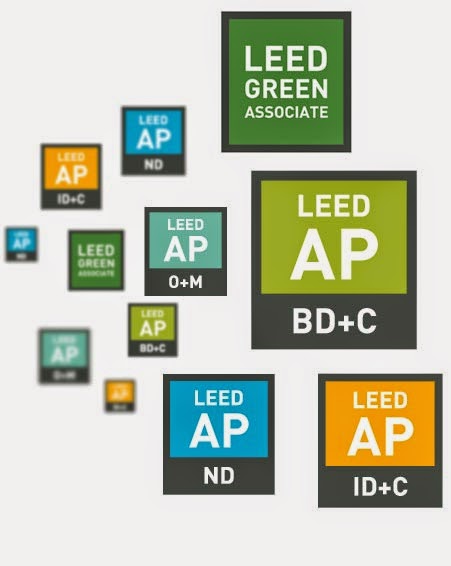
Hi Top 10 countries for LEED!.

Hi Top 10 countries for LEED!.

Did your country make the top ten list?


LEED projects can be found in over 140 countries and territories around 
the world and on six out of seven continents — there are no LEED projects in Antarctica, but you never know what the future holds.
To provide a better view of LEED’s impact globally, we've ranked the top 10 countries for LEED outside of the U.S.. Looking at the gross square meters of certified space around the globe, we came up with the list below.
Click Here Or Image Above To Visit Leed Official Website!.

What’s changed over the last year?

Canada, China and India have always led the way for LEED projects and in the last year they certified a combined total of 13 million gross square meters.
The top ten countries together, represent 61 million gross square meters of LEED-certified space. That’s an increase of 41% from last year. 
Brazil, which ranks seventh for LEED-certified gross square meters of space and fourth for LEED-certified projects, recently certified two stadiums in preparation for the 2014 World Cup games. 
They have the largest number of certified stadiums and the only platinum certified stadiums outside the U.S.

Hi Translate Linguistic Hi Proverb Tool.

(Hi) - Visit The New Digital World.

(Hi) - Visit The New Digital World.
As It Is Explained, Dismantled & Incorporated.

Ambient Air Quality Monitoring / Continuous Emissions Monitoring / Process Control / Data Handling.

Ambient Air Quality Monitoring / Continuous Emissions Monitoring / Process Control / Data Handling.
"Gas Monitoring Solutions"

Hi Air Pollution Engineering!.

Hi Regulations, Pollution Engineering!.

Hi Wikipedia Search.

Search results

Hi Bloggers Contact Form.

Name

Email *

Message *

Hi ' Graduate School at the Centre for Alternative Technology!.

Hi ' Graduate School at the Centre for Alternative Technology!.
"MSc Renewable Energy and the Built Environment."