Showing posts with label global. Show all posts

6 Nov 2014

Hi Innovating global Halal industries!!!

Hi Innovating global Halal industries!!!


As the $2 trillion Halal industry, which includes food, finance and much more, grows, many call for new ways to develop coherence and diversity.
“Demand is increasing and we now must focus on developing our products. I am not saying forget about being Halal, but we must start innovating,” says Saleh Abdullah Lootah, Managing Director of Islami Foods.
Speaking at the WIEF conference in Dubai, which ended on October 30, Lootah went on to stress the need to get rid of Halal complexes: “There are different norms and cultures across different regions, so it is difficult to apply one model of Halal-compliant business.”
This comes at a time when the Muslim world is looking at itself in hopes to develop the cross-border trade of Halal-certified goods. Media reports this week claim that a series of memoranda of understanding and agreements have been signed by Dubai Exports in partnership with Malaysia’s Halal HDC, and the Dubai Islamic Economy Development Centre (DIEDC).

Lootah goes on to talk about the need for the Halal industry to innovate the consumer experience. “The next step is to focus on innovating the Halal experience and, making it attractive to Muslims and non-Muslims alike.”
In his closing address, HE Hamad Buamim, President and CEO at the Dubai Chamber of Commerce and Industry, the co-organizers, said that the forum marked the “start of a new chapter of cooperation between Dubai and the world, as part of Dubai: Capital of Islamic Economy vision.”
“We must also harness technology, which is driving progress in the global economy, to ensure the future development of Halal industries,” he notes.
Overall, the rhetoric coming from leaders of the Halal industries was based around developing the right technologies to enhance and innovate the Halal products to globalize the industry.

The WIEF conference attracted more than 2,000 participants from all around the world. Organized in a collaboration between the WIEF Foundation, the Dubai Chamber of Commerce and Industry and Dubai Capital of Islamic Economy, the event was held at the Madinat Jumeirah Conference Centre Dubai on October 28-30, 2014, with the arching theme ‘Innovative Partnerships for Economic Growth’, which seeks to position Dubai as a leader of global Halal industries.

5 Nov 2014

Hi Global Market for U.S. Indoor Air Quality to Reach $11.4 Billion by 2019!.

Hi Global Market for U.S. Indoor Air Quality to Reach $11.4 Billion by 2019!.


BCC Research reveals in its new report, U.S. Indoor Air Quality Market, the U.S. indoor air quality (IAQ) market is expected to grow to $11.4 billion by 2019, with a compound annual growth rate (CAGR) of 7 percent over the next five years. The equipment segment market is anticipated to grow at a CAGR of 7.4 percent.


Since 2012, continuing media attention focused on the health effects of toxic mold, the outbreak of infectious diseases (such as bird flu), and the increase in chronic respiratory diseases such as asthma have resulted in a new interest in IAQ in homes, commercial buildings, schools and hospitals.


There is a distinct equipment market within the industry that includes products such as air-cleaning equipment, HVAC equipment, HVAC replacement filters and IAQ instrumentation. This market, which was valued at $3.9 billion in 2013, is predicted to reach nearly $4.1 billion in 2014 and $5.8 billion in 2019, with a projected CAGR of 7.4 percent.


Although the commercial segment was the largest market for IAQ equipment and services in 2013, the residential sector is projected to move into the top position by 2019, with 29 percent of the market, followed by commercial buildings (28 percent), healthcare (16 percent) and schools (14 percent).


“The U.S. economy has continued to recover from the 2008–2009 recession, boosting the market for IAQ equipment and services,” says BCC Research environment analyst, Andrew McWilliams. “The IAQ market is important because health problems such as building-related illness and sick-building syndrome, as well as other ailments associated with poor IAQ in homes, offices and schools, are on the rise in the U.S.”


U.S. INDOOR AIR QUALITY MARKET determines the size of the overall IAQ market and its subcategories, such as IAQ equipment and technologies, consulting services and environmental services.


23 Oct 2014

Hi Standards Leave Their Mark on Engineering.

Hi Standards Leave Their Mark on Engineering.

World Standards Week takes place the week of October 20, and it presents an opportunity to reflect on how standards are used in engineering and impact almost every facet of modern life.

For example, standards make it possible for the Internet to exist and for Engineering360 to be shared seamlessly worldwide. Likewise, banking institutions function on a set of standard protocols that enable global trade to take place.


As this article’s main photo suggests, the National Institute of Standards and Technology in 2011 published a revised biometric standard that vastly expands the type and amount of information that forensic scientists can share across international networks to identify victims or solve crimes.
But even something as simple as a screw has thousands of standards associated with it. These ensure that the manufactured product is usable everywhere, says Robert Russotti, senior director for online marketing at theAmerican National Standards Institute (ANSI).

Standards cover testing, performance, quality and procedures, Russotti says. They help a specifying engineer determine, for example, how many times a door hinge will open and close before it’s likely to fail, or if a particular metal is suitable for grinding.

A more ( shall we say) standard definition from the International Organization for Standardization (ISO) and the International Electrotechnical Commission (IECA) defines a standard as a document, established by consensus that provides rules, guidelines or characteristics for activities or their results.
ISO says that it does not decide when to develop a new standard. Instead, ISO responds to a request from industry or other stakeholders. Typically, an industry sector or group communicates the need for a standard to its national member (such as ANSI in the U.S.) who then contacts ISO. 
ISO standards are developed by groups of experts from all over the world, that are part of larger groups called technical committees. These experts negotiate all aspects of the standard, including its scope, key definitions and content.


Developing ISO standards is a consensus-based approach and comments from stakeholders are taken into account. So-called Draft International Standards are circulated among ISO members who have three months to comment and vote on the draft. ANSI coordinates the U.S. voluntary consensus standards system. In that role it provides a neutral forum for the development of policies on standards issues and serves as a watchdog for standards development and conformity assessment programs and processes.

ANSI also accredits qualified organizations, whose standards development process meets all of ANSI’s requirements, to develop American National Standards. However, ANSI itself does not develop standards. In addition, ANSI represents U.S. interests in regional and international standardization activities while overseeing conformity assessment activities that promote the global acceptance of U.S. products, services, systems and personnel.

In the U.S., standards are voluntary and consensus based, which means that product designers and manufacturers can decide whether or not to follow them. The marketplace helps decide whether or not a non-standard product achieves success. In other countries, standards carry the force of law. Standards also may be used as a defense in a legal challenge. A product that fails may be defensible if it can be proved that it conformed to specific standards, Russotti says.

 Hi Click Here To View ISO Standard Homepage.

American National Standards (ANSs) are essential tools used in every industry. Today, there are some 9,500 ANSs that have been developed and approved in accordance with ANSI essential requirements. American National Standards are voluntary and serve U.S. interests well because all materially affected stakeholders have the opportunity to work together to create them. ANSI-approved standards only become mandatory when, and if, they are adopted or referenced by the government or when market forces make them imperative.

ANSI says that globally relevant standards make it easier for many companies to get their products certified and on the shelves in countries around the world, allowing them to take part in global value chains, benefit from technology transfer and compete on a more equal footing. Similarly, nations that incorporate international standards into their policies and regulations can allow their citizens access to a wider selection of high-quality goods, while also providing protection against dangerous or faulty products and services.


14 Sept 2014

Hi Ozone Layer Healing, But...

Hi Ozone Layer Healing, But...


According to the ozone sensors on Europe's MetOpt weather satellite, the hole over Antarctica in 2012 was the smallest in the last 10 years. 

Since the beginning of the 1980s, an ozone hole has developed over Antarctica during the southern spring - September to November - resulting in a decrease in ozone concentration of up to 70%. 

Man-made chlorofluorocarbons - CFCs - have a negative effect on the ozone, depleting it and creating the infamous hole. 

The Montreal Protocol has stopped the increase of CFC concentrations, and a drastic fall has been observed since the mid-1990s. 

You can see the Total Ozone values in the Northern Hemishpere and Southern Hemisphere along with the climate model prediction (in blue) showing recovery continuing over several decades.

The good news is that the Antarctic ozone hole is on the way to recovery. 

The bad news is that scientists now think it is helping to slow the polar seas' ability to absorb carbon dioxide, a leading contributor to Global Warming. 


Antarctic accounts for about 40% of the total carbon absorbed by the world's seas. 

Scientists at Johns Hopkins University found the same winds that caused extremely low temperatures leading to higher levels of ozone depletion are speeding circulation patterns in polar waters, with the currents closer to the land pushing more deep water up to the ocean surface.

Scientists worry that the increasing upwelling of that water, hundreds of years old and naturally rich in carbon dioxide, is reducing the amount of manmade carbon absorbed by sub-polar waters.

Thanks to the Montreal Protocol we are well on our way to eliminating the use of CFCs. 

The damage however will go on for decades and more.

Further information on these most recent studies can be found in the Feb 15, 2013 issue of OzoNews click the following link here to download.

 Click here to view website for further information.

14 Jun 2014

Hi Air - Mercury Emissions Spread Overland!.

Hi Air - Mercury Emissions Spread Overland!.

Hi Air / Water; A national study finds that mercury has spread, even to areas considered to be pristine.


Fig A Above;

Although generally low in concentration, a study of mercury levels in fish from 21 Western national parks did find some locations where mercury concentrations exceeded health thresholds for potential impacts to fish, birds and humans, according to a recent publication by U.S. Geological Survey (USGS) and National Park Service (NPS) researchers. This study, the first of its kind, detected mercury in all of the fish sampled, even from the more pristine areas of the parks.

What is Mercury?


Mercury is a toxic, global contaminant that threatens ecosystem and human health. It is a naturally occurring element and the only metal that exists as a liquid at room temperature. Mercury is also used in industrial practices, mostly for the manufacture of industrial chemicals and for electrical and electronic applications.
The EPA sets standards for safe consumption of fish for human health in regard to mercury levels. In addition, EPA and the U.S. Food and Drug Administration have issued a joint advisory regarding recommended consumption of fish and shellfish due to mercury contamination levels. More than 16 million lake acres and one million river miles are under fish consumption advisories due to mercury in the United States, and 81 percent of all fish consumption advisories issued by EPA are because of mercury contamination.

Where Were These Fish Found?


More than 1,400 fish were collected between 2008 and 2012 from hard-to-reach, high-elevation lakes and streams in 21 national parks in the Western United States and Alaska.  Investigators sampled 16 species, with a focus on sport fish such as brook trout, rainbow, cutthroat and lake trout, as well as smaller prey fish eaten by birds and other wildlife.

How Did Mercury Migrate?


Although there are natural sources of mercury, such as emissions from volcanoes, the majority of the mercury in these high elevation areas arrives from man-made sources such as coal-burning power plants, waste incinerators, oil and gas wells, and mining operations. The mercury can originate many miles from the national parks, as it travels through the atmosphere as tiny particles or gases. It then settles to the ground carried by falling rain or snow, or landing on the ground as dust particles. In wetlands, atmospheric mercury can be transformed into methylmercury, a more dangerous form to living organisms.

Methylmercury levels can accumulate in animals over time and actually increase in concentration up the food chain, resulting in very high levels in larger animals. This process is known as bioaccumulation and happens when predators eat prey animals that already have mercury in them. The mercury in the prey animals is then stored in the tissues of the predator.

Dangerous to Human and Animal Health!!!


During their research, the scientists found that the mercury levels in fish greatly varied between parks and between sites within each park. In most parks, mercury concentrations in fish were moderate to low in comparison with similar fish species from other locations in the Western United States. Mercury concentrations were below EPA’s fish tissue criterion for safe human consumption in 96 percent of the sport fish sampled.

There were, however, particular areas that researchers identified elevated fish mercury concentrations, including levels that exceed safe human consumption or wildlife health benchmarks. Some sport fish exceeded the EPA human health criterion at Lake Clark, Lassen Volcanic, Mount Rainier, Rocky Mountain, Wrangell-St. Elias, Yellowstone and Yosemite national parks.

Mercury concentrations in individual fish also exceeded the most conservative fish toxicity benchmark at Capitol Reef, Lake Clark, Lassen Volcanic, Mount Rainier, Rocky Mountain, Wrangell-St. Elias, Yosemite and Zion national parks. Mercury levels in some fish exceeded the most sensitive health threshold for fish-eating birds at all parks except Crater Lake, Denali, Grand Teton, Great Basin, Great Sand Dunes, Mesa Verde and Sequoia-Kings Canyon national parks.

Start with Science!!!


Although risk of harm to humans and wildlife may be low in many locations, there are substantial concerns about the locations with high risk. 

This study identified areas where additional research is needed to better understand the risk to all national park units, and other remote landscapes or understudied environments.

Ultimately, advisories and related warnings consider both the risks and benefits of consuming fish. 

Future collaborations between research groups would map patterns of mercury across national parks in greater detail, supporting resource managers’ decisions to protect both national park visitors and the wildlife they come to see.

The USGS’s website at  provides many fascinating stories and information, click the link here to visit the site. 

- "Their tag line is “science for a changing world.”


Fig B. Above; Spatial distribution of the 21 national parks sampled in this study. Size of circle represents percentage of total dataset.


Fig C. Above; A NPS researcher holds a brook trout in Mount Rainier National Park. Image credit: Collin Eagles-smith, USGS.

4 Jun 2014

Hi Visit Events Eye "Green Build."

Hi Events Eye "Green Build."

!!JOIN THE GREEN REVOLUTION IN THE BIG EASY!!


In 2014, we're joining together in New Orleans from Oct. 22-24 for Leadership Jazz

The music of the green movement is undeniable – its lyrics are engaging individuals across the world, its innovation is reviving our spirit and its passion is fueling the future

Together our unique ideas are improvising a melody that is leading a successful transformation of our building and communities. 

The Big Easy is the perfect setting to celebrate this global impact, while also embracing the essence of community, culture and soul. In 2013, USGBC turned 20, and we invite you to join the revolution as we build momentum and march into the next 20 years.

 Click Image To Visit Event Homepage.

Hi Event Intro...,


9 May 2014

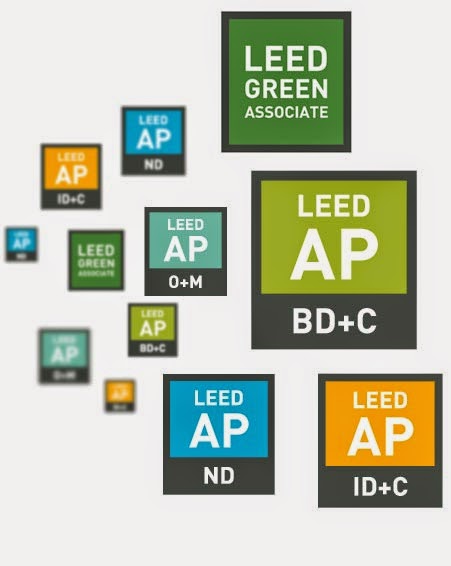
Hi Top 10 countries for LEED!.

Hi Top 10 countries for LEED!.

Did your country make the top ten list?


LEED projects can be found in over 140 countries and territories around 
the world and on six out of seven continents — there are no LEED projects in Antarctica, but you never know what the future holds.
To provide a better view of LEED’s impact globally, we've ranked the top 10 countries for LEED outside of the U.S.. Looking at the gross square meters of certified space around the globe, we came up with the list below.
Click Here Or Image Above To Visit Leed Official Website!.

What’s changed over the last year?

Canada, China and India have always led the way for LEED projects and in the last year they certified a combined total of 13 million gross square meters.
The top ten countries together, represent 61 million gross square meters of LEED-certified space. That’s an increase of 41% from last year. 
Brazil, which ranks seventh for LEED-certified gross square meters of space and fourth for LEED-certified projects, recently certified two stadiums in preparation for the 2014 World Cup games. 
They have the largest number of certified stadiums and the only platinum certified stadiums outside the U.S.

17 Apr 2014

Hi Artificial Cooling Tricky Topic for Climate Panel!.

Hi Artificial Cooling Tricky Topic for Climate Panel!.
BERLIN (AP) -- It's Plan B in the fight against climate change: cooling the planet by sucking heat-trapping CO2 from the air or reflecting sunlight back into space.
Called geoengineering, it's considered mad science by opponents.
Supporters say it would be foolish to ignore it, since plan A - slashing carbon emissions from fossil fuels - is moving so slowly.
The U.N.'s expert panel on climate change is under pressure from both sides this week as it considers whether geoengineering should be part of the tool-kit that governments use to keep global warming in check.
Russia, in particular, has been pushing the panel to place more emphasis on such techniques in a key document for policymakers being finalized in Berlin this week.
Drafts leaked before the conference only mentioned one of the options, removing CO2 from the air and storing it underground. Russia, a major oil and gas producer, said the Intergovernmental Panel on Climate Change should also mention solar radiation management, which could include everything from covering open surfaces with reflective materials or placing sun-mirrors in orbit around the Earth.
'It is expedient to give a short description of the approach and mention the major 'pro and contra',' Russia said in comments submitted to the IPCC and seen by The Associated Press.
But even advocates of studying geoengineering express doubts.


'Really at the present moment there is a high level of uncertainty surrounding all of these options,' said Steve Rayner, co-director of Oxford University's geoengineering program. Still, he said it's worth continuing to research geoengineering 'to get a better sense of whether there's any merit in pursuing these technologies further.'
After discussions among governments and scientists, a mention of geoengineering was added last year to the first of four summaries of the IPCC's authoritative assessment on climate change. They are now working on the third one, which deals specifically with fighting climate change.
The document is important because it will be used as scientific guidance for governments as they negotiate a new global climate pact, set to be adopted in 2015.
Some environmental activists watching the talks in Berlin want the Intergovernmental Panel on Climate Change to scratch references to geoengineering altogether. They worry that such technologies would be ineffective, possibly harmful and delay efforts to shift the world's energy system from oil and coal to low-carbon energy sources like wind and solar power.
'It seems like a dangerous gamble to hold up this technology that may not work,' said Jim Thomas, of the Canada-based ETC Group.
However, the IPCC's draft document says that unless emissions are cut much faster than currently projected, measures to scrub CO2 from the air will be have to be deployed to avoid potentially dangerous levels of warming.
The problem is those technologies don't exist yet or are in an experimental stage. 
- "No one knows whether they will be successful."
Ideas include spraying clouds with seawater to make them more reflective or pumping aerosols into the air to mimic the cooling effect from major volcanic eruptions.
Each is associated with unknown risks, including potentially shifting weather patterns or damaging the ozone layer that protects the Earth from ultraviolet sunrays.
One technology that is currently being tested at a small scale is called 'bioenergy with carbon capture and storage,' or BECCS
The idea is to grow crops that absorb CO2 from the atmosphere then burn them in a power station to generate energy
The resulting CO2 emissions are captured at the plant and then stored deep underground. The net effect of that process is that CO2 is removed from the air.
In a scientific report underlying the summary for policy-makers being discussed in Berlin and obtained by AP, the IPCC notes that BECCS could play a key role in curbing the buildup of CO2 in the atmosphere, which scientists say is the main reason for global warming
However, it would have to be deployed at a large scale, which would require major investments
There could also be negative impacts if food crops are replaced by bio-crops.
Right now the carbon removed through this technique is only a fraction of the 30 billion tons of CO2 emitted annually from the combustion of fossil fuels.
'BECCS faces large challenges in financing and currently no such plants have been built and tested at scale,' the IPCC says in the draft report.

6 Mar 2014

Hi Find Out! Make It A Difference! - Hi Green Project & LEED News Accounts!

Hi 1 - Find Out! Make It A Difference!:


King Abdullah Financial District now the world's biggest green development:


Massive real estate project seeking green accreditation


Riyadh's King Abdullah Financial District (KAFD) is now the largest project in the world that is seeking green building accreditation, MEED's Saudi Green Buildings Forum 2011 was told today.


The project involves building 34 towers in a site with a total area of 1.6 million square metres. It will provide more than 3 million square metres of space for various uses, 62,000 parking spaces and accommodation for 12,000 residents. The KAFD aims to create 44,000 new jobs and to be the largest financial centre in the Middle East.

The LEED director for the project at the Saudi BinLadin Group, Whysal Numan said that the drive to achieve the highest standards in sustainability has involved a wide range of initiatives designed to lift environmental standards during the construction process and after the opening of the project. This is scheduled to take place in 2014.

The Saudi Binladin Group is the principal design and build contractor on the project. Sustainability initiatives at the project include an erosion sedimentation control plan to reduce pollution from dust and to control soil erosion. "We have land-watering in the project each hour and every day and other measures to control dust coming from the site," Numan said. Traffic speed within the project is controlled for the same reason.

"Our construction waste management programme aims to divert at least 50 per cent of our construction waste from disposal in landfill and incinerators," Whysall said. "The indoor air quality plan is to reduce health risks for construction workers."

The project will use alternative transport systems. "The KAFD is to have a monorail system with six stations that will connect with public parking areas. There will also be parking for bicycles and changing rooms for people who come the district by bicycle.

LEED requirements demand that water consumption must be reduced by 20 per cent. To achieve this, technology being used in the project includes dual-flush toilet systems and low-water flow fittings. Buildings within the KAFD will also make use of greywater.

"Energy performance is most critical," Whysall said. "LEED requires a 10 per cent reduction in energy use. We have introduced a lot of strategies to achieve this and they include low ultra-violet materials; shading device systems; heat recovery systems and efficient light fixtures.

"We are aiming to use at least 50 per cent of the materials from recycled material," Whysall said. This has involved using recycled steel and porcelain. "We are aiming that at least 10 per cent of the total cost will be in the form of recycled material and we could get to 20 per cent and more."

"Building materials have been selected which are extracted and manufactured within 500 miles of the project site for a minimum of 10 per cent of the cost of the total value of the materials used in the project," Whysall said. "We are targeting 20 per cent." Sustainable adhesives, paints, flooring and composite wood are being used to reach this target.

The client for the King Abdullah Financial District is the Rayadah Investment Company.


Hi 2 - Find Out! More..., With Make It A Difference!:


Green buildings movement is becoming increasingly influential 

UAE, Saudi Arabia and Qatar join green building agenda


Green Technologies managing director Mario Seneviratne told the MEED Saudi Green Buildings Forum 2011 in Riyadh this morning that the green buildings movement is becoming influential in a growing number of countries.


"There are more than 80 countries signed up to the green building agenda," Seniveratne said. "They include the UAE, Qatar and Saudi Arabia."


Seniveratne said that a coherent approach to applying green building principles will deliver economic and environmental benefits. "Green buildings are the solution to environmental and business challenges," he said. Seniveratne said that the Leadership in Energy & Environmental Design (LEED) green building rating system is still dominant in the Gulf.


"There are more LEED buildings than those rated by any other system," Seneviratne said. "It's been used in the region for 13 years. It's easily adaptable to the Middle East but you can use any one of the many green building rating systems."

Hi 3 - Find Out! More..., With Make It A Difference!:


Incentives sufficient to promote green buildings, says Minister 


Existing regulations good enough in Saudi Arabia for sustainability

Saudi Arabia's Deputy Minister for Electricity Saleh Alawaji told the MEED Saudi Green Buildings Forum 2011 in Riyadh this morning that existing regulations are good enough to promote high standards of sustainability in new buildings.

"I think the Saudi building code is a sufficient document in my opinion," Alawaji said. "But I believe that we have a huge amount of energy being consumed in existing buildings.

"We need to work hard to tackle this issue. Providing (government) incentives is one of the effective tools but who will be in charge of these incentives? And the government needs to see a return on incentive.

Hi 4 - Find Out! More..., With Make It A Difference!:


Conference to tackle challenges in green building 


The Saudi Green Building Forum will be held at Riyadh's Four Seasons Hotel on Oct. 13-16 under the aegis of Prince Mansour bin Miteb, minister of Municipal and Rural Affairs, and in the implementation of King Abdullah's initiative. High-profile experts from both the Kingdom and abroad will attend the event.


The third annual intellectual think-tank event will involve a conference, workshop, exposition, and project case studies of the current year as well as discuss green building and energy technologies.

According to Faisal Al-Fadi, the forum's secretary-general, the conference will provide a dominant platform for discussing challenges for green building related to the sustainability to promote green building initiatives in Saudi Arabia, to boost business collaboration, unveil new employment opportunities, and enhance the built environment across the kingdom. He said the presentations, panel discussion and case studies at the conference would challenge issues such as expansion of green building, sustainable urban development, and Saudi Arabia's position as a frontrunner – a hub of the fastest growing construction and projects market in the Middle East and North Africa.

Al-Fadi noted that the green market had witnessed swift expansion over the past three years and with the government and private sector companies in support of international green building standards and initiatives. The US Green Building Council's Leadership in Energy and Environment Design (LEED) registrations and certifications have significantly increased since the inception of the Saudi Green Building Forum in 2010. This increase makes it evident that more and more organizations, people and governments are aspiring to create a sustainably built environment and legislation.

The forum's conference and projects case studies will continue to stay as a significant means of aiding the development of laws and regulations set by King Abdullah Green Building initiatives; enhancing the comprehensive collection of standards and guidance systems that is being implemented in the Kingdom; signifying the building information modeling technology; strengthening relation with industry stakeholders; delivering information, analysis and insights into available business opportunities; and building cultural awareness of local urban development.

In his statement, Prince Mansour said: "This meeting represents a valuable opportunity to review the achievements of previous recommendations, including more than one axis, either as assigned to the government sector, professional bodies or entrusted to the private sector."

Among the distinguished speakers are Mohammed Al-Suwaiyel, president of King Abdulaziz City for Science and Technology; Abdullah Al-Muqbil, mayor of Riyadh municipality; Edward Burton, president and managing director of the US-Saudi Arabian Business Council; Mohamed Al-Mady, SABIC vice chairman and CEO; Amer Kayani, minister counselor of commercial affairs at Riyadh Embassy in the US; and Abdulrahman Al-Jeraisy, chairman of Riyadh Chamber of Commerce and Industry.


Hi 5 - Find Out! More..., With Make It A Difference!:


Riyadh to host three-day summit of Saudi Mega Infrastructure Projects in September 


Saudi Arabia is about to witness one of the mega events of this year, Saudi Mega Infrastructure Projects Summit, beginning September 16, 2012 onwards for three days at Riyadh Marriott Hotel, Saudi Arabia.


Visit Direct Link Exhibition Site For All Details.

Hi Translate Linguistic Hi Proverb Tool.

(Hi) - Visit The New Digital World.

(Hi) - Visit The New Digital World.
As It Is Explained, Dismantled & Incorporated.

Ambient Air Quality Monitoring / Continuous Emissions Monitoring / Process Control / Data Handling.

Ambient Air Quality Monitoring / Continuous Emissions Monitoring / Process Control / Data Handling.
"Gas Monitoring Solutions"

Hi Air Pollution Engineering!.

Hi Regulations, Pollution Engineering!.

Hi Wikipedia Search.

Search results

Hi Bloggers Contact Form.

Name

Email *

Message *

Hi ' Graduate School at the Centre for Alternative Technology!.

Hi ' Graduate School at the Centre for Alternative Technology!.
"MSc Renewable Energy and the Built Environment."